
RAM Mounts are one of the best systems for mounting a motorcycle GPS, but they confuse a lot of riders at first because RAM does not work like a one-piece universal holder. You are not really buying a single motorcycle GPS mount. You are choosing a base, an arm, and a mounting plate or cradle, then combining those parts into a setup that fits your bike. That sounds more complicated than it really is, and once you understand the logic behind the system, it becomes obvious why so many riders use RAM for GPS installations.
That modular design is also why RAM works better than many all-in-one mounts. A sport bike has a very different cockpit than an ADV bike. A cruiser may have open bar space but a lower viewing angle. A touring bike may have a great crossbar or dash area, but only if you choose the right arm length. Some riders want the GPS tight and tucked close to the gauges. Others need extra clearance around a windscreen, handguards, or dash plastics. RAM lets you build around those differences instead of forcing one fixed bracket to do everything poorly.
This article is focused specifically on how to choose the right RAM setup for a motorcycle GPS. It is not a step-by-step installation article, and it is not a general beginner overview of every GPS mounting method. If you want the broader picture, see our guide on how to attach a GPS to a motorcycle. If you want a more tactical install walkthrough for a RAM handlebar base, see our RAM motorcycle handlebar mount installation guide. This page is about helping you choose the right RAM configuration before you spend money on the wrong parts.
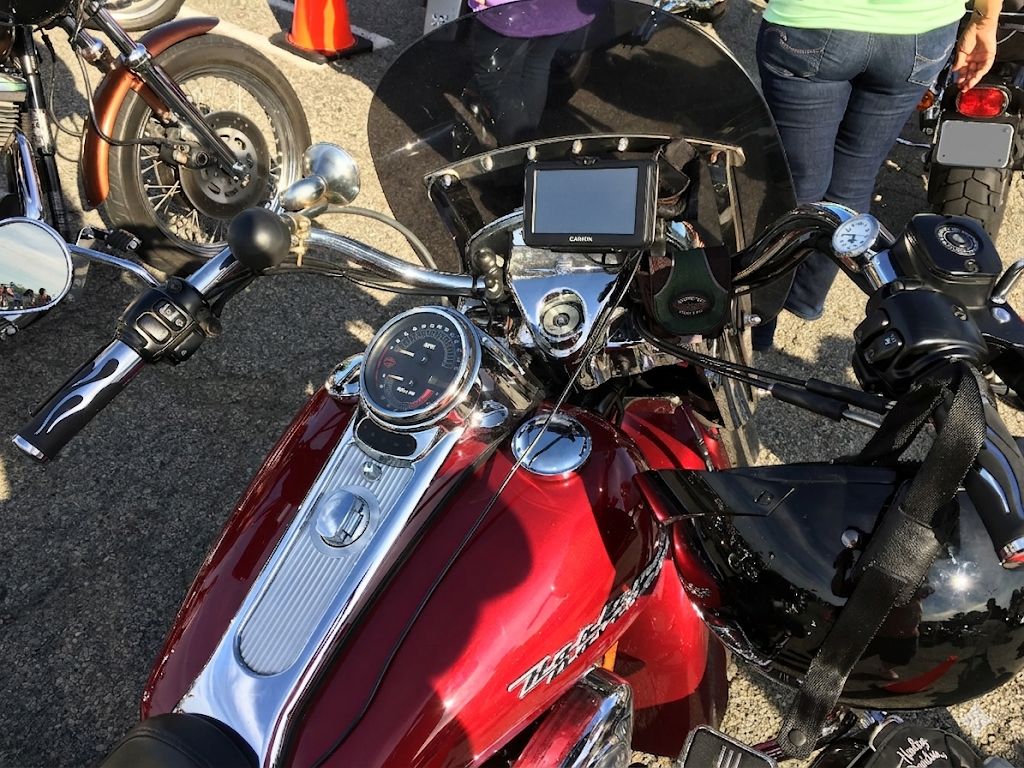
The right RAM motorcycle GPS setup comes down to three choices: where the mount starts (base), how far it extends (arm length), and how the GPS attaches (usually an AMPS-compatible plate or cradle for dedicated GPS units like Garmin Zumo models).
How to think about a RAM motorcycle GPS setup
A lot of riders start by asking, “What is the best RAM mount for a motorcycle GPS?” That sounds reasonable, but it is not really the best question. The better question is: where do I want the GPS to sit, and what mounting points does my bike actually give me? Once you answer that, the best RAM setup usually becomes much easier to identify.
In practical terms, you are balancing four things at the same time. First, visibility: can you read the GPS quickly without dropping your eyes too far from the road? Second, reach: can you tap the screen without stretching awkwardly? Third, stability: is the setup tight enough to minimize movement and vibration? Fourth, clearance: does the mount avoid blocking gauges, switches, the key area, the windscreen, or other controls? The best RAM configurations solve all four problems at once. The bad ones solve one problem while creating two more.
That is why RAM is so good for GPS mounting. It is not just that the parts are durable. It is that the system lets you fine-tune the geometry. You can start with a handlebar base, then realize a shorter arm would make it feel tighter. You can start with a stem mount, then realize the GPS needs a slightly different angle to clear the dash. The value is in the flexibility. The goal of this guide is to help you choose the right level of flexibility without overbuilding the setup.
Step 1: Choose the right RAM base
The base is the foundation of the whole setup. It decides where the GPS begins and strongly influences visibility, cable routing, and arm length. Most riders will end up choosing from four realistic base types.
Handlebar base
This is the most common choice and the safest place to start for most motorcycles. If you ride a standard bike, cruiser, touring bike, or many naked bikes, a handlebar base usually offers the best combination of compatibility and adjustability. It is also the easiest base to understand because it works with so many different cockpit layouts. If your bars give you open clamp space, a handlebar-based RAM setup is often the most practical answer.
A handlebar base makes the most sense when you want the simplest universal starting point, when you may swap GPS devices later, or when you want more freedom to shift the mount left, right, higher, or lower until the position feels right. The tradeoff is that some bikes place the bars lower than ideal, which can drop the GPS farther from your natural line of sight than a higher crossbar or stem position would.
The RAM-B-149ZU is a popular handlebar U-bolt setup because it gives you a handlebar base, arm, and RAM-compatible adapter in one package. It is a strong place to start if your bike has normal bar space and you want a proven RAM foundation.
Fork stem base
Fork stem bases are especially useful on sport bikes where handlebar space is limited or awkward. The biggest advantage is that they center the GPS over the triple-tree area, which often creates a cleaner and more symmetrical cockpit. If you care about keeping the device near the centerline of the bike, this can be a much cleaner solution than trying to clamp onto a cramped bar area.
A stem setup makes the most sense when your clip-ons do not provide much usable room, when you want the GPS centered instead of hanging to one side, or when you are trying to keep the cockpit visually cleaner. The fork stem base is not automatically better than the handlebar base, but on the right bike it feels much more natural.
If your bike has a usable stem opening, the RAM-B-342U is one of the cleanest ways to center a GPS without cluttering the bars.
Mirror mount base
Mirror mounts are more specialized, but they can be very effective on scooters, commuters, and motorcycles with crowded bars. If switches, reservoirs, handguards, and accessory clamps have already eaten up your handlebar space, a mirror position can rescue the install. It usually is not the first recommendation for a motorcycle GPS, but it can be the smartest answer when the normal mounting zones are already full.
Think of a mirror-based setup as more of a packaging solution than an ideal cockpit solution. It is useful when space is your biggest problem, not when perfect adjustability is your top priority.
Crossbar or navigation bar base
If your bike has a crossbar or accessory bar, this is often the best-case scenario. Adventure and touring bikes frequently offer this type of mounting point, and it is excellent for GPS use because it brings the device higher into your natural sightline. That means faster glances, less eye movement, and a cockpit that feels more purpose-built. If you already have a navigation bar, use it. It is often the best place on the entire bike for a GPS.
The best base is usually the one that puts the GPS in your natural dash-check zone. A setup that looks tidy in the garage but forces you to drop your head too far on the road is not the right setup.
Step 2: Choose the right RAM arm length
The arm is where many setups either become excellent or become annoying. In theory, a longer arm sounds helpful because it gives you more freedom. In practice, extra length often means extra movement. On a motorcycle, extra movement means more shake, more visual distraction, and a setup that feels less confidence-inspiring than it should.
For most motorcycle GPS applications, the decision usually comes down to a short arm or a standard-length arm. If you can make a short arm work, it is usually the better choice because it keeps the device closer to the bike and reduces leverage. If your cockpit needs a little more reach, a standard-length arm may make more sense. The goal is to use the shortest arm that still gives you a clean, readable position.
A short arm is usually the best choice for riders who already know where the GPS should sit. A standard arm makes more sense when the bike layout demands extra reach around a windscreen, bar shape, or dash structure. Neither is automatically right. The right arm is the shortest one that solves your specific positioning problem.
View Price on Amazon →
View Price on Amazon →
Step 3: Match the RAM plate to your GPS
The device side matters just as much as the bike side. Most dedicated motorcycle GPS units, especially Garmin Zumo models, use the AMPS mounting pattern. That is one reason RAM works so well for motorcycle GPS installs. An AMPS-compatible plate lets you move from the RAM arm to the GPS cradle cleanly and securely without resorting to awkward adapters.
If you are running a Zumo XT, XT2, or XT3, the main question usually is not whether RAM can support it. The better question is which base and arm combination gives you the cleanest result on your specific bike. For more device-specific recommendations, see our Garmin Zumo XT, XT2, and XT3 mount guide.
The RAM-B-347U is the part that makes a lot of motorcycle GPS builds come together cleanly. If your cradle uses the standard 4-hole AMPS pattern, this is the piece that ties the GPS side into the RAM system.
Best RAM setup by bike type
Standard and commuter bikes
For most everyday street bikes, the safest recommendation is a handlebar base + short arm + AMPS-compatible GPS plate. It is simple, stable, and usually offers enough flexibility without making the cockpit feel overbuilt. This is the default setup for a reason. It works on a huge number of motorcycles, and it is often the easiest system to tweak later if you decide the GPS needs to move slightly.
Sport bikes
Sport bikes usually benefit from a fork stem base + short arm. This keeps the device centered and avoids many of the packaging problems that come from trying to clamp onto already-cramped control areas. The shorter arm is especially useful here because sport bike cockpits tend to reward compact setups. The GPS stays close, the view is cleaner, and the whole install looks more intentional.
Adventure and touring bikes
If you have a crossbar or navigation bar, use it. A crossbar base + short or standard arm + AMPS plate is often the best overall GPS configuration for long-distance riding. It places the screen higher, which matters a lot when you are constantly checking directions in changing road conditions. If no crossbar exists, a handlebar setup can still work well, but many riders will prefer the higher cockpit position whenever the bike allows it.
Minimal setup vs adjustable setup
This is one of the most useful ways to think about RAM. A minimal setup uses the shortest arm and tightest geometry you can get away with. A more adjustable setup sacrifices some compactness to gain more fine-tuning room. Most experienced riders eventually move toward the minimal side once they discover the ideal position.
That does not mean adjustability is bad. It means adjustability is most valuable during setup and experimentation. Once you know where the GPS needs to be, less hardware movement is usually better. For that reason, a lot of riders start with a standard arm, learn where the device wants to live, and later tighten the build with a shorter arm if possible.
A simple way to choose your RAM setup
If you want the quick decision version, use this logic. If your bars are open and your bike is not especially cramped, start with a handlebar base. If you ride a sport bike with limited bar space, think stem mount first. If your bike has a crossbar, that is often the best GPS location on the whole motorcycle. Then choose the shortest arm that still gives you a clear view. Finally, use an AMPS plate if your GPS cradle supports it. That simple process gets most riders very close to the right answer without overcomplicating the shopping list.
Common setup mistakes that make RAM feel worse than it is
RAM gets blamed for problems that usually come from poor configuration, not poor hardware. The most common mistakes include choosing a longer arm than necessary, placing the GPS too low and forcing your eyes to travel too far, using a side position when a centered position would be easier to read, forgetting to think about cable routing, and building for maximum adjustability instead of long-term stability.
A well-chosen RAM setup should feel intentional, not improvised. If it looks awkward, vibrates more than expected, or blocks something important, the answer usually is not that RAM is the wrong system. The answer is that one of the three setup decisions needs to be rethought: base, arm length, or plate choice.
Bottom line
The right RAM motorcycle GPS mount is not one specific product. It is the right combination of base, arm length, and GPS attachment method for your bike. That is why RAM remains so popular. It gives riders a way to build around their actual cockpit instead of settling for a one-size-fits-all bracket.
For most riders, that means starting with the mounting position first, then choosing the shortest arm that still gives good visibility, then finishing with an AMPS-compatible plate or cradle if the GPS supports it. If you take that approach, you end up with a setup that is cleaner, more stable, and easier to live with on real rides.
And if you already know you are mounting a Garmin device, make sure to read our Garmin Zumo XT, XT2, and XT3 mount guide for more device-specific compatibility notes and mount recommendations.
How to Install a RAM Motorcycle Handlebar Mount
Motorcycle GPS Mounts Hub
Garmin Zumo XT / XT2 / XT3 Mounts
Motorcycle GPS Mounts: Best Garmin Zumo, AMPS, Handlebar and Fork Stem Options