
Mounting a GoPro used to be simple—stick it somewhere and go. That doesn’t cut it anymore. Modern GoPro setups are more powerful, heavier, and used in more demanding environments than ever. Whether you’re mounting on a motorcycle, inside a vehicle, or out on an ATV, the wrong mount leads to shaky footage, failed adhesion, or worse—losing the camera entirely.
The key today is not just picking a mount—it’s picking the right mounting system for your environment. There are three major ecosystems that matter: GoPro’s own mounts, heavy-duty modular systems like RAM, and hybrid setups using 1/4″-20 camera threads.
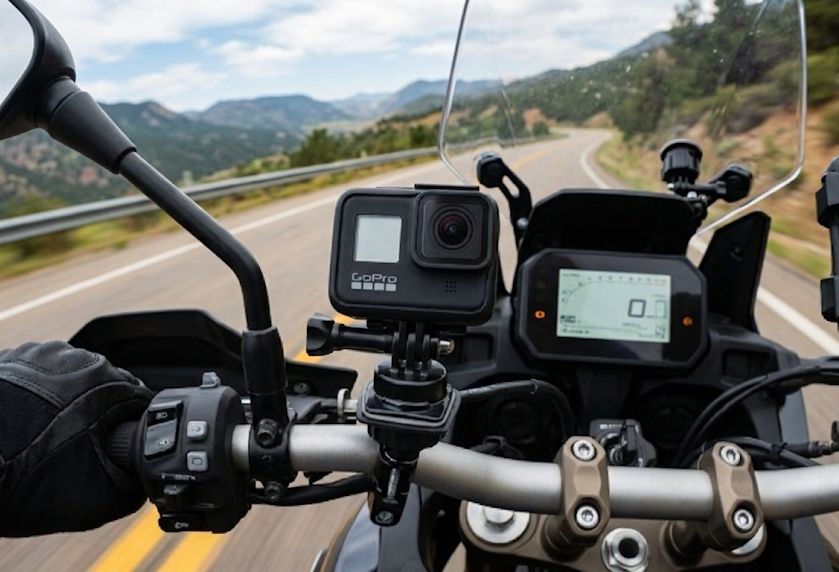
Use GoPro mounts for lightweight and helmet setups, RAM for high-vibration environments like motorcycles and ATVs, and 1/4″-20 adapters when you need maximum flexibility across different gear.
Best GoPro Mount Types by Use Case
| Use Case | Best Mount Type | Why It Works |
|---|---|---|
| Motorcycle / ATV | RAM U-Bolt or Clamp | Handles vibration and rough terrain |
| Car Windshield | Suction Mount | Easy install and repositioning |
| Helmet / Body | Adhesive Mount (OEM) | Lightweight and secure |
| Tripod / Hybrid Setup | 1/4″-20 Adapter | Universal compatibility |
Top GoPro Mount Options (That Actually Make Sense)
1. Heavy-Duty Setup: RAM GoPro Ball Adapter + U-Bolt Base
If you’re mounting a GoPro on anything that vibrates—motorcycle handlebars, ATV bars, roll cages—this is still the gold standard. RAM’s rubber ball system absorbs vibration far better than rigid plastic mounts, and the mechanical clamp won’t fail like adhesive or suction under stress.
The key is pairing a GoPro-compatible RAM ball adapter with a short arm and a U-bolt base. Keep the arm short—this dramatically reduces shake.
2. Car Setup: GoPro Suction Cup Mount (OEM)
For cars, simplicity wins. GoPro’s official suction mount is still one of the best options available because it’s designed specifically for the camera’s weight and balance. It’s quick to install, holds well on glass, and doesn’t require permanent modification.
This is ideal for windshield mounting, exterior body shots (on smooth panels), and temporary setups.
3. Low-Profile Setup: GoPro Adhesive Mounts
For helmets, dashboards, or anywhere you want a clean look, adhesive mounts are still the best choice. GoPro’s OEM adhesive mounts are far more reliable than generic versions and are designed to handle wind and motion.
They’re not repositionable, so placement matters—but once installed properly, they’re extremely solid.
Be careful what you buy. There are hundreds of these types of mounts and the adhesive and build quality vary wildly. Stick with authentic GoPro adhesive mounts. Better made and you know there won’t be fitment issues.
4. Heavy Duty: The Fat Gecko
This is the heaviest and most versatile mount for cameras. We call it the Mother of all Camera Mounts and even dedciated an article to this line.
This uses a 1/4″ – 20 threaded screw to attach to the GoPro. There are three interchangeable tripod legs and each has it’s own suction cup. We’ve seen people use these on the outside of cars going 60 mph. When securely attached, these aren’t coming off. If you’re into some rugged activities, this might be the one you have been looking for.
Be aware, the mount is larger than the camera. Far larger. Like we said, it’s the Mother of all Camera Mounts.
Common Mounting Mistakes
- Using adhesive mounts on rough or dirty surfaces
- Using long extension arms in high-vibration environments
- Choosing cheap plastic mounts for motorcycles or ATVs
- Not matching the mount type to the environment
- Skipping a tether in high-risk setups
Bottom Line
There’s no single “best” GoPro mount anymore—it depends entirely on how you’re using the camera. For high-vibration environments like motorcycles and ATVs, RAM is still the safest and most stable option. For cars and casual use, GoPro’s own mounts are hard to beat. And if you want maximum flexibility, a 1/4″-20 adapter system opens up the most possibilities.
The smartest approach is to build a system, not just buy a mount. Start with how and where you’ll use the camera, then choose the mount style that fits that environment.