
A RAM motorcycle handlebar mount looks more complicated in the box than it actually is. Between the clamp, the arm, the nuts, and the adapter plate, it’s easy to assume this is a job for a shop. It isn’t. Most riders have the base, arm, and cradle fully installed in under fifteen minutes using nothing more than a wrench or a small socket set, and once it’s tightened down correctly it stays put through real vibration, not just a quick parking lot test.
This guide walks through both common ways to mount a RAM system to motorcycle handlebars, the U-bolt base and the tool-free Tough-Claw, plus what each part of the system actually does, how to pick the right ball size, and the mistakes that cause mounts to loosen or rattle after a few rides.
| Mount | Best For | Handlebar Range |
|---|---|---|
| RAM U-Bolt Handlebar Base | Permanent installs, maximum security | 0.5″ to 1.25″ (with composite adapter) |
| RAM Tough-Claw Small Base | Tool-free install, riders who swap bikes | 0.625″ to 1.14″ |
| RAM Double Socket Arm | Connecting any base to any cradle | Standard length, B-size ball |
| RAM Diamond Adapter | Attaching phone, GPS, or camera cradles | AMPS hole pattern, B-size ball |
How the RAM System Fits Together
Every RAM motorcycle setup is built from three building blocks, regardless of which base you choose. A base attaches to the bike. A double socket arm connects to the rubber ball on that base. A diamond adapter or device-specific cradle attaches to the other end of the arm and holds the phone, GPS unit, or camera. Because every connection point uses the same ball-and-socket design, you can mix and match components as long as the ball sizes match, and you can adjust the final position almost infinitely before locking it down.
Most motorcycle setups use what RAM calls B-size, a 1-inch ball. This is the standard size built into the U-bolt base, the Tough-Claw small base, and the double socket arm listed above. If you already own RAM components from another vehicle or a previous bike, check the ball size before assuming they’ll interchange. A C-size 1.5-inch ball arm will not seat into a B-size socket, and forcing it is the fastest way to damage a mount.
Option 1: Installing the U-Bolt Handlebar Base
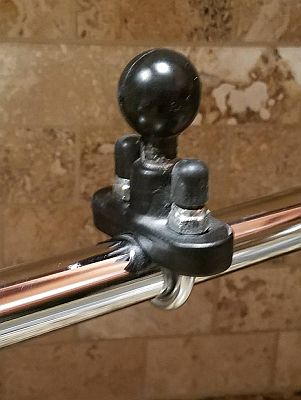
The U-bolt base is the more permanent of the two mounting options and the one most riders default to for a setup they don’t plan on removing often. It uses a metal U-bolt, a composite adapter for smaller bars, two locking nuts, and rubber end caps, all clamping around the handlebar to hold a fixed 1-inch ball in place.
Start by choosing a mounting spot on the handlebar that won’t interfere with the throttle, brake lever, clutch, or instrument cluster, and that still keeps the device within a quick glance. Slide the U-bolt underneath the handlebar so the threaded ends pass through the holes in the base. Thread the two locking nuts onto those ends and begin tightening with a wrench, but don’t go all the way yet.
If your handlebar diameter is under an inch, slide the included composite adapter between the U-bolt and the bar before finishing the tightening. Hold the adapter in place while alternating between the two nuts, tightening each a little at a time so the base sits flat instead of cocking to one side. Once it’s snug, finish with the rubber end caps over the exposed U-bolt tips. Hand tightening is not sufficient here. Motorcycle vibration will work a loose nut free within a few rides, so use a wrench or pliers and confirm there’s no play left in the clamp before moving on.
Option 2: Installing the Tough-Claw Base (No Tools Required)
The Tough-Claw base trades a small amount of long-term rigidity for genuine convenience. Instead of a U-bolt and nuts, it uses a rubber-padded claw that tightens around the bar with a single knob, no wrench needed. That makes it a strong option for riders who switch the mount between bikes, or who want the ability to remove the device holder when the bike is parked without leaving a clamp behind.
To install it, loosen the knob fully so the claw opens wide enough to slip over the handlebar. Position it where you want the final mount location, since this is easier to adjust now than after tightening. Close the claw around the bar and turn the knob clockwise until the rubber pads bite down firmly with no rocking or twisting when you push on the ball. The small Tough-Claw covers bars from about 0.625 inches up to 1.14 inches, which fits the vast majority of motorcycle and ATV handlebars without needing the composite adapter the U-bolt base requires.
Attaching the Double Socket Arm and Cradle
Once either base is secured, the rest of the installation is identical. The double socket arm has a tightening knob in its center. Turn it counter-clockwise to loosen both sockets enough to slide over the rubber balls on each end, the base on one side and the diamond adapter or device cradle on the other.
With both ends loosely connected, adjust the arm and cradle into the position and viewing angle you actually want before tightening anything fully. This is the easiest point in the process to get the angle right, since the whole assembly moves freely until the knob is locked down. Once you’re satisfied, turn the knob clockwise until both sockets clamp firmly onto the balls. A properly tightened arm should not droop, sag, or shift position when you push on the device end with moderate pressure.
For most motorcycle installations, the standard-length arm strikes the best balance. It provides enough reach to position a phone or GPS unit comfortably without adding the extra flex that comes with longer arm options, which matters more on a motorcycle than it does in a car given how much vibration the system has to absorb.
Common Installation Mistakes
A handful of avoidable mistakes account for most of the complaints riders have about RAM mounts loosening or rattling over time, and almost none of them are actually a flaw in the hardware.
Never apply thread-locking compounds such as Loctite to a RAM mount. These products are designed for metal-to-metal threaded connections, and RAM’s nylon and composite components can degrade on contact with them. If a connection feels loose after riding, the fix is to re-tighten it properly, not to glue it in place.
Tighten U-bolt nuts evenly rather than cranking one side down fully before touching the other. Uneven tightening cocks the base at an angle and can leave one side of the clamp loose even when the other side feels rock solid. A thin rubber shim between the U-bolt and the handlebar also helps prevent the clamp from scratching painted or chrome finishes, and most hardware stores sell rubber strips that work well for this.
Before finishing any installation, turn the handlebars fully in both directions to confirm the mount, arm, and device don’t make contact with the tank, fairing, or cables at full lock. This is easy to overlook when the bike is sitting still and the bars are centered, and it’s one of the more common reasons riders end up repositioning a mount after the first ride.
Choosing a Cradle for Your Device
The diamond adapter listed above is a plate, not a holder by itself. It gives you the standard AMPS hole pattern that the vast majority of phone cradles, GPS cradles, and action camera mounts use to attach to a RAM arm. If you’re mounting a phone, look for a cradle with the AMPS pattern already built in rather than buying the diamond adapter and a separate plate, since that adds an unnecessary connection point and one more thing to keep tight. GPS units and action cameras typically ship with their own RAM-compatible cradle, in which case the diamond adapter usually isn’t needed at all.
For a closer look at vibration-rated phone cradles built specifically for motorcycle use, see our guide to motorcycle handlebar phone mounts, and for the broader picture of how ball sizes and arm lengths affect stability across different vehicle types, our RAM Mounts system guide covers that in more depth.
Final Thoughts
Whether you go with the U-bolt base for a permanent setup or the Tough-Claw for tool-free convenience, the rest of the system works exactly the same way once it’s in place. The ball-and-socket design absorbs vibration that would otherwise rattle a rigid mount loose, and it gives you the freedom to fine-tune the angle until the device sits exactly where you want it. Get the base tightened correctly, get the arm locked at the right angle, and a RAM motorcycle handlebar mount will hold up to years of regular riding without another thought.