
The Aosu SolarCam D1 Classic is a solar-powered PTZ camera that ships with a base bracket for standard wall installs. That bracket works well on a flat surface, but gutter mounting, vinyl siding, and building corners all require something more purpose-built. The good news is that there are several no-drill and specialty mounts that work well with the D1 Classic. This guide covers the best Aosu D1 Classic mount options for each type of installation.
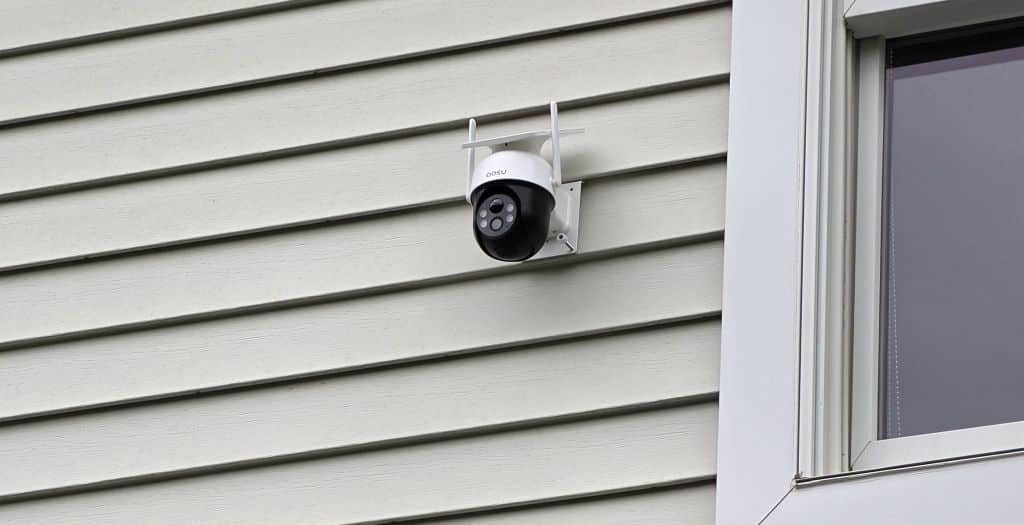
My Aosu D1 Classic installed with the VOMENC siding mount.
Aosu D1 Classic Mount Options at a Glance
| Mount | Best For | Drilling Required |
|---|---|---|
| Included base bracket | Standard flat wall installs | Yes |
| VOMENC Gutter Mount | No-drill gutter installs | No |
| Gutter Mount with Sun Shade | Exposed gutter locations | No |
| VOMENC Vinyl Siding Mount | Vinyl siding homes | No |
| Corner Mount Bracket | Building corners and wider coverage | Yes |
How the D1 Classic Mounting System Works
The D1 Classic ships with a base bracket that screws into a flat mounting surface using the included hardware and template. Once mounted, the camera can pan 360 degrees and tilt up to 90 degrees through the Aosu app. Because it is a PTZ camera, you have more flexibility in positioning than you do with a fixed camera.
The solar panel is adjustable independently of the camera head. Aosu recommends facing the panel south in the northern hemisphere for the strongest solar exposure. The camera itself does not have to point in the same direction as the panel, so you can aim the camera toward the area you want to monitor while angling the panel toward better sunlight.
If the mounting location does not receive enough sun, the camera can also be topped up manually through its USB-C charging port.
Best Mounts for the Aosu D1 Classic
1. Included Base Bracket — Best for Standard Wall Installs
For a flat wall, wood soffit, fascia, or another solid mounting surface, the included bracket may be all you need. It installs with screws using the supplied mounting template and provides a secure base for the camera.
For higher installations, make sure the screws are going into solid material rather than relying only on thin siding or weak anchors. The D1 Classic and its solar panel put more weight on the mounting point than a small fixed camera.
2. VOMENC Gutter Mount 2-Pack — Best No-Drill Gutter Option
The VOMENC Gutter Mount is the option I use personally with my Aosu D1 Classic, so I can confirm firsthand that it fits the camera properly.
The mounting holes line up correctly with the D1 Classic bracket, installation does not require drilling, and the mount clips directly onto the gutter. The camera shown in the photo near the top of this guide is installed using this exact VOMENC mount.
I also like this option because it keeps the camera easy to reposition without putting permanent holes in the fascia or siding. If you already have a suitable gutter near the area you want to monitor, this is the mount I would start with.
View VOMENC Gutter Mount on Amazon →
3. Gutter Mount with Sun Shade — Best for Exposed Locations
This no-drill gutter mount adds an integrated ABS hood above the camera. The shade can help protect the lens area from overhead sun, rain, and some incidental glare while still letting you mount the D1 Classic directly to a gutter.
Like the standard gutter mount, it avoids drilling into the house and keeps the camera easy to reposition. It is worth considering when the camera will sit in a particularly exposed location with little protection from an overhang.
View Gutter Mount with Sun Shade on Amazon →
4. VOMENC Vinyl Siding Mount — Best for Siding Homes
The VOMENC Vinyl Siding Mount is designed for the D1 Classic Series and attaches at the horizontal seam of compatible vinyl or aluminum siding without drilling.
It uses a metal mounting plate along with leveling hardware to keep the camera aligned. Because there are no permanent holes in the exterior, this style of mount is especially useful for renters or homeowners who do not want to drill into siding.
It can also be repositioned later if you decide the original camera location is not ideal.
View VOMENC Vinyl Siding Mount on Amazon →
5. Corner Mount Bracket — Best for Building Corners
A corner mount positions the D1 Classic where it can see along two sides of a building instead of looking outward from a single flat wall.
That location can make much better use of the camera’s 360-degree pan capability because the camera has open sightlines in multiple directions. For driveways, side yards, and front-to-side coverage, a corner position can often cover more useful area from one camera.
This style of bracket does require drilling, but it can be a better choice when maximizing coverage matters more than keeping the installation completely no-drill.
View Corner Mount Bracket on Amazon →
Placement Tips for the Aosu SolarCam D1 Classic
- Mount at 7 to 10 feet. Aosu recommends this range for PIR motion detection. Mounting too low can increase ground-level triggers, while mounting excessively high can reduce useful detection coverage.
- Use a corner when you want coverage in two directions. Corner placement generally makes better use of the camera’s pan range because it opens sightlines along multiple sides of the building.
- Give the solar panel good sun exposure. Aosu recommends south-facing placement in the northern hemisphere when possible. Because the panel angle is independent of the camera head, you have some flexibility in how you position both.
- Check Wi-Fi before installing permanently. Test the camera at the intended location before drilling or climbing a ladder for the final install. A marginal Wi-Fi signal is much easier to solve before the camera is mounted.
- Use patrol positions selectively. If you use PTZ patrol features, concentrate on the entry points and zones that matter most rather than constantly moving the camera through unnecessary positions.
Frequently Asked Questions
Can I Mount the Aosu D1 Classic Without Drilling?
Yes. Both gutter-mount options and the vinyl siding mount allow you to install the D1 Classic without drilling into the house. The corner bracket requires screws.
Does the VOMENC Gutter Mount Fit the Aosu D1 Classic?
Yes. I use the VOMENC gutter mount personally with my Aosu D1 Classic, and the camera shown in this guide is mounted with it. The mounting holes line up correctly with the D1 Classic bracket.
What Height Should I Mount the D1 Classic?
Aosu recommends mounting the camera about 7 to 10 feet above the ground for PIR motion detection. On many single-story homes, mounting near the gutter or eave puts the camera within this range.
Does the D1 Classic Solar Panel Need to Face the Same Direction as the Camera?
No. The solar panel can be angled independently of the camera’s pan and tilt head. You can point the camera toward the area you want to monitor while positioning the panel for better sunlight.
Why Use a Corner Mount With a PTZ Camera?
A corner position gives a PTZ camera open sightlines along more than one side of a building. That can make better use of the D1 Classic’s pan range than mounting it against a flat wall where part of the rotation faces back toward the structure.