
A transducer mount matters more than most anglers realize. It is easy to focus on the fish finder unit itself, the screen resolution, the frequency range, the CHIRP technology, but none of that means much if the transducer is not mounted correctly. Poor placement leads to weak sonar returns, inconsistent readings, and missed structure exactly when you need to see it.
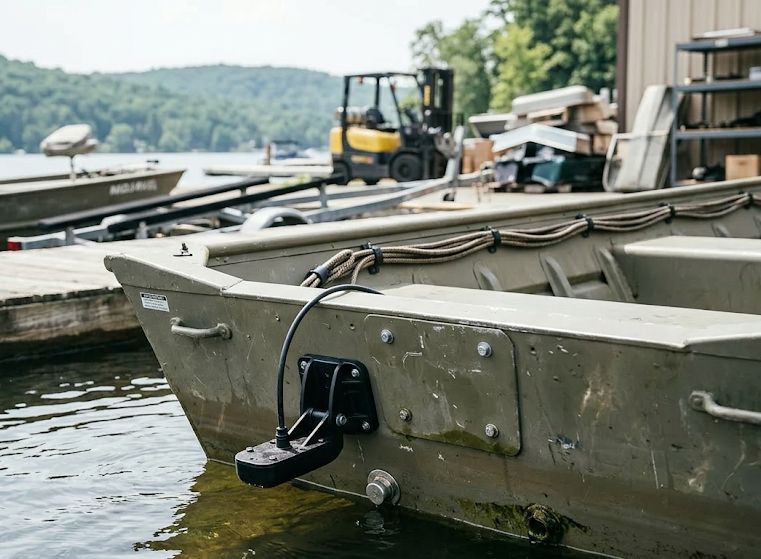
The goal of any transducer mount is simple: keep the sensor in clean, uninterrupted water while protecting it from impact and allowing easy adjustment. Many factory mounts handle the basics, but they lack the flexibility and durability that serious anglers eventually want. This guide covers the best modern transducer mounting options available, including clamp mounts, kayak systems, and adjustable track-mounted arms.
Quick Comparison: Best Transducer Mounts
| Mount | Best For | Type | Key Advantage |
|---|---|---|---|
| DMSIDN Portable Transducer Bracket | Portable and rental boats | Clamp | No drilling, 360-degree rotation |
| Scotty Transducer Mounting Arm | Kayaks and small craft | Arm system | Quick deploy and retract |
| VINmounts Kayak Fish Finder Mount | Budget track-mounted kayaks | Track mount | Deployable arm at a lower price point |
| YakAttack SwitchBlade System | Premium track-mounted kayaks | Track mount | Precise adjustment and stability |
Why Factory Transducer Mounts Get Replaced
Most transducers from Garmin, Lowrance, and Humminbird ship with a plastic transom mount. These mounts get the job done out of the box, but they come with real tradeoffs once you start using the boat regularly.
- Require drilling into the transom
- Limited range of adjustment
- Exposed to trailer and debris damage
- Plastic components degrade with UV and saltwater exposure over time
For casual, occasional use, a factory mount is often sufficient. Anglers who fish more frequently, trailer often, or want cleaner sonar readings tend to upgrade fairly quickly once they see what a better mount does for readability at speed.
Best Clamp Mount (No Drilling Required)
Clamp mounts are one of the most practical upgrades available for a transducer mount. They attach securely to the transom without requiring permanent modification, which makes them a favorite for rental boats, seasonal setups, and anyone who does not want to put new holes in their hull.
The DMSIDN Portable Transducer Bracket is a versatile clamp-style mount built for canoes, kayaks, and small fishing boats. It features a 360-degree rotating design, which makes it easy to fine-tune both the angle and depth of the transducer without loosening the entire clamp.
This type of mount tends to work best for:
- Canoes and kayaks that need a compact, adjustable clamp
- Rental boats where drilling is not allowed
- Seasonal installations that get removed at the end of the season
- Anyone who wants to avoid permanent hull modification altogether
The full 360-degree rotation allows for precise positioning below the waterline, which is critical for clean, consistent sonar readings at both idle and cruising speed.
Best Kayak Transducer Mount
Kayak setups need a different approach than a traditional transom mount. Limited deck space and the need for portability make bulky clamp systems less practical, especially on sit-on-top kayaks where every mounting point is competing with rod holders and tackle storage.
The Scotty Transducer Mounting Arm is one of the most reliable kayak-specific solutions available. It connects to a standard Scotty base and allows the transducer to be lowered into the water when fishing and raised out of the way when paddling or transporting the kayak.
This design has a few real advantages over a fixed mount:
- Quick deployment and removal in seconds
- No permanent installation required
- Compatible with a wide range of kayak deck layouts
This is a proven setup for kayak anglers who want reliability without a complicated install. We have covered the broader Scotty ecosystem in more depth in Mastering the Scotty Mounting System if you want a full overview of how the bases and posts work together.
Best Budget Track Mount for Kayaks
Not every kayak angler wants to invest in a full premium track system. The VINmounts Kayak Fish Finder Mount is a more affordable track-compatible option that still gives you a real transducer arm instead of a fixed bracket.
It works with popular units like the Garmin Striker and Lowrance fish finders, and it mounts directly to a standard kayak gear track, so it fits into the same ecosystem as other track-based accessories without the premium price point of a system like the YakAttack.
This is a solid middle ground for anglers who:
- Already have gear tracks installed but do not need the top-tier adjustability
- Want a real deployable arm rather than a fixed clamp
- Are outfitting a kayak on a tighter budget
Best Premium System (Track-Mounted Kayaks)
For higher-end kayak setups already running gear tracks, a modular system provides the best performance and the widest range of adjustment.
The YakAttack SwitchBlade Transducer Deployment Arm is built specifically for track-mounted kayaks. It gives precise control over transducer depth and angle while maintaining a stable platform, even in moving water or when the kayak shifts with wave action.
This system stands out for a few reasons:
- Mounts cleanly to any standard gear track
- Offers fine adjustment control for depth and angle
- Provides a stable platform that resists vibration in moving water
For serious kayak anglers running a full electronics setup, this is one of the most refined mounting systems on the market. We referenced YakAttack’s broader track ecosystem in Best Kayak Track Mount Systems.
Choosing the Right Transducer Mount for Your Boat
Hull material. Aluminum hulls are more sensitive to corrosion around drilled fastener holes, which makes a clamp mount a safer long-term choice. Fiberglass hulls tolerate through-hull mounting better, so a transom mount is less of a compromise.
Trailering frequency. If the boat gets trailered often, an adjustable or retractable mount that can be raised out of harm’s way protects the transducer from curb strikes, ramp scrapes, and road debris.
Deck space. Kayaks and small jon boats benefit from arm-style mounts that can be deployed and stowed, since there is rarely room for a fixed, permanently extended bracket.
Existing gear tracks. If your kayak already has a gear track system installed, a track-mounted arm will usually outperform a clamp mount, since it shares the same mounting ecosystem as your other accessories. The VINmounts option covers this at a lower price point, while the YakAttack SwitchBlade covers it at the premium end.
Best Mount by Use Case
| Use Case | Best Mount Type |
|---|---|
| Bass Boat | Upgraded clamp-style transom mount |
| Kayak Fishing (Deploy/Retract) | Scotty arm system |
| Kayak Fishing (Budget Track) | VINmounts track mount |
| Kayak Fishing (Premium Track) | YakAttack SwitchBlade |
| Rental Boat | Clamp mount |
| Portable Setup | Clamp or retractable arm mount |
Common Transducer Mounting Problems
| Problem | Cause | Fix |
|---|---|---|
| Weak readings | Mount positioned too high | Lower to just below the waterline |
| Interference or noise | Turbulence or aerated water | Relocate away from prop wash |
| Physical damage | Trailer or ramp contact | Switch to an adjustable or retractable mount |
Installation Tips
- Mount in clean water flow, well away from prop wash
- Test positioning on the water before tightening the mount fully
- Check trailer clearance before finalizing placement
- Route and secure wiring so it cannot snag or chafe against the hull
Frequently Asked Questions
What is the best transducer mount for a kayak?
It depends on your budget and setup. A Scotty arm-style mount offers the best balance of quick deployment and reliability for most kayak anglers. Anglers with an existing gear track system who want top-tier adjustability tend to prefer the YakAttack SwitchBlade, while the VINmounts track mount is a solid lower-cost option for those who still want a real deployable arm without the premium price.
Do I need to drill holes to install a transducer mount?
No. Clamp-style transducer mounts attach to the transom without any drilling, which makes them a good option for rental boats, aluminum hulls, or anyone who wants to avoid permanent modification.
How deep should a transducer sit in the water?
The transducer face should sit just below the waterline, positioned to stay fully submerged in clean, uninterrupted water at cruising speed. Mounting it too high causes weak or inconsistent sonar readings.
Can a transom transducer mount be used on an aluminum boat?
Yes, but a clamp-style mount is usually the safer long-term choice on aluminum hulls, since it avoids the corrosion risk that can develop around drilled fastener holes.
Bottom Line
Upgrading from a factory transducer mount can meaningfully improve both sonar performance and day-to-day usability. Clamp mounts eliminate drilling, kayak arm systems add portability, and track-mounted solutions, whether budget or premium, offer the most precision and stability for anglers already running a gear track setup.
The best transducer mount is the one that keeps the sensor properly positioned, stable in the water, and protected when it is not in use.