
A kayak track mount system is the single most useful upgrade you can make to a fishing kayak. Without one, every accessory you add requires its own set of drilled holes. Change your mind about where a rod holder should live, and you are either drilling again or living with a setup that does not work the way you want. With a track system installed, that same rod holder slides anywhere along the rail and locks into position in seconds without tools.
The concept is straightforward but the execution matters. Track systems from different manufacturers use different channel profiles, different base hardware, and different locking mechanisms. Some are aluminum, some are composite. Some support a wide ecosystem of dedicated accessories, others are more limited. Choosing the wrong track for your kayak or your intended accessories creates compatibility problems that are expensive and time-consuming to fix after the fact.
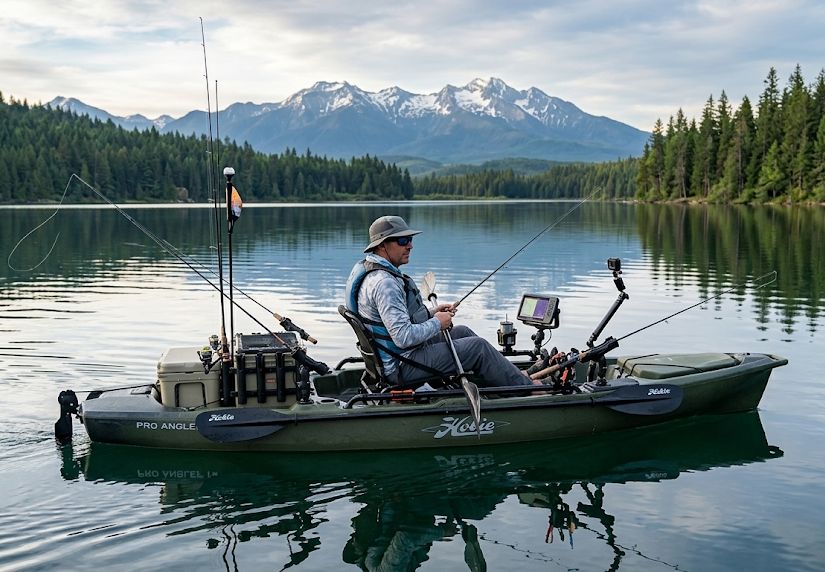
This guide covers how kayak track systems work mechanically, what to consider before buying, how to plan your installation, and a detailed look at the two systems that dominate the market: YakAttack GearTrac and the Scotty Low Profile Track. By the end you will know which system fits your kayak and your gear, and exactly what to order to get started.
Quick answer: If you are building a full fishing rig from scratch and want the deepest accessory ecosystem, YakAttack GearTrac is the right choice. If you already use Scotty rod holders and accessories and want to add track capability without switching ecosystems, the Scotty Low Profile Track with the Gear-Head adapter is the cleaner path.
How Kayak Track Systems Work
Every kayak track system works on the same fundamental principle: a length of rail installs permanently on the kayak surface, and accessories attach to that rail via a sliding base that can be repositioned anywhere along the channel without tools. The rail stays on the kayak. The accessories come on and off as needed.
The channel profile is the critical technical detail. Most kayak track systems use a T-slot channel, a narrow opening at the top of the rail with a wider cavity below. Accessory bases use a T-bolt or T-nut that slides into the channel from the end (on standard tracks) or drops in from the top (on top-loading tracks). Tightening a knob or screw expands the base hardware against the channel walls, creating a friction lock that resists both sliding and rotation under load.
The practical implication of the channel profile is compatibility. Tracks that use the standard 1/2-inch wide T-slot accept hardware from multiple brands interchangeably. YakAttack GearTrac, Scotty, RAM Mounts track hardware, and most factory-installed kayak tracks all use this standard width, which means a ScrewBall or Gear-Head adapter bought for one system will work in any compatible track. This cross-brand compatibility is one of the most useful features of the kayak track ecosystem and is worth understanding before you buy.
Where systems diverge is in their proprietary locking mechanisms. YakAttack’s LockNLoad system uses a lever with three operating modes that provides security levels and adjustment speed not available from standard T-bolt hardware. Scotty’s Gear-Head adapter uses a push-and-twist lock. Standard T-bolt bases use a simple tighten-to-lock knob. All three work reliably; the differences show up in how quickly you can reposition accessories and how much security they provide under heavy fishing loads.
Planning Your Track Installation
Before buying any track hardware, spend time on the kayak with a ruler and a clear picture of where each accessory will actually live. This planning step prevents the most common track installation mistake: buying track lengths that do not fit the available flat surfaces on the hull.
Kayak decks have far less flat real estate than they appear to from above. Scuppers, molded features, carry handles, and hull geometry all interrupt flat surfaces. The gunwale areas on either side of the seat are almost always the best primary track locations because they are within reach of the seated paddler without crossing the casting or paddle path. The stern area behind the seat works well for trolling rod holder positions. The bow deck, if flat and accessible, can support electronics or a second rigging zone.
Measure each flat zone and select a track length that fits with a small margin on each end. A 4-inch track suits a single accessory in a tight spot. An 8-inch track gives you meaningful slide range for one or two accessories. A 12-inch or 16-inch track creates a full rigging zone where three or more accessories can spread out and be repositioned independently. The longer tracks are generally more useful where hull geometry allows them, because the repositioning freedom is proportional to track length.
For any track section that will hold a rod holder under active fishing tension, plan to install a backing plate on the inside of the hull below the mounting screws. The backing plate distributes load across a wider area of the hull and prevents the screws from pulling through under sudden impact loads. YakAttack’s FullBack backing plate is designed specifically for this purpose. For Scotty track installs in high-load positions, a marine-grade aluminum or stainless backing plate achieves the same result.
Important: Always use stainless steel hardware for kayak track installation. Standard zinc or cadmium-plated screws will corrode in a marine environment within one to two seasons, making removal difficult and potentially staining the hull. Stainless screws cost slightly more and last indefinitely.
Track System Comparison
| Feature | YakAttack GearTrac | Scotty Low Profile Track |
|---|---|---|
| Material | Anodized aluminum (GT90, GT175) or composite (GTSL90) | High-strength composite |
| Available lengths | 4″, 8″, 12″, 16″ | 1″, 4″, 8″ |
| Loading style | End-load (standard) or top-load (GTTL series) | Top-load only |
| Accessory ecosystem | Largest in category — LockNLoad, ScrewBall, full accessory line | Scotty post-mount ecosystem via Gear-Head adapter |
| Cross-brand compatibility | Works with RAM ScrewBall, Scotty #426 adapter, most 1/2″ hardware | Works with standard 1/2″ T-bolt hardware including YakAttack |
| Best for | Full rig builds, maximum accessory range, heavy-duty use | Scotty accessory users, low-profile installs, lighter loads |
YakAttack GearTrac: The Full-Ecosystem Choice
YakAttack GearTrac is the category-leading kayak track system for one reason: the depth of the accessory ecosystem behind it. Rod holders, camera mounts, fish finder brackets, paddle holders, cup holders, visibility flags, transducer arms, and more all attach directly to GearTrac via the ScrewBall or LockNLoad base systems. No other track manufacturer has built an accessory line of comparable breadth around a single track standard.
The GearTrac line itself splits into two material tiers. The aluminum series (GT90 and GT175) are hard-anodized and built for long-term marine use under load. The GT175 is the heavier-duty option at 1.75 inches wide, with screw attachment on both flanges for better resistance to torquing forces from rod holders under trolling tension. The GT90 is narrower at 0.9 inches and suited to lighter loads including camera mounts, electronics brackets, and paddle holders. The composite SpectraLite (GTSL90) is the entry-level option, available in multiple colors, and handles light accessories on recreational or occasional-use kayaks.
The top-loading versions of both aluminum series (designated GTTL90 and GTTL175) add a practical usability improvement worth understanding. On standard end-loading tracks, adding an accessory to the middle of a populated track requires removing everything to one side first. On top-loading track, each accessory drops into the channel at any point independently. For kayaks with dense rigging setups where you are frequently adjusting positions, top-loading is worth the slight additional cost.
GearTrac is compatible with most factory-installed kayak track systems from Hobie, Old Town, Jackson, and Wilderness Systems, as well as Scotty and RAM track hardware. The ScrewBall base, which is a 1-inch ball mount that rides in the channel, also accepts the full RAM Mounts ball-socket accessory ecosystem, effectively giving you access to two of the largest marine accessory lines from a single track install.
View YakAttack GT175 GearTrac on Amazon
For a complete breakdown of the GearTrac system including the full accessory lineup, see our YakAttack mounting system guide.
Scotty Low Profile Track: The Scotty Ecosystem Solution
The Scotty Low Profile Track (#440) takes a different approach to the same problem. Where GearTrac is an aluminum rail designed for maximum load capacity and accessory range, the Scotty track is a composite rail designed specifically to be as unobtrusive as possible on the kayak deck. At 3/8 of an inch tall, it is the lowest-profile track on the market, which matters on sit-inside kayaks and touring boats where deck clearance affects paddle stroke and body position.
The track uses a top-load design exclusively. Accessories drop into the channel at any point along the rail without sliding from the end, which is a practical advantage for mid-session repositioning. The channel accepts the Scotty #438 Gear-Head Track Adapter, which is the bridge between the track and the full Scotty post-mount ecosystem. With the Gear-Head adapter installed, every Scotty rod holder, camera mount, fish finder bracket, and other post-mount accessory becomes track-compatible without any additional hardware.
The Gear-Head adapter itself uses a push-and-twist locking mechanism. You drop it into the track, rotate to lock it, then install any Scotty post-mount accessory into the top of the adapter. The whole assembly is fully adjustable: the adapter can slide anywhere along the track, and the Scotty accessory above it retains its full 360-degree horizontal rotation and vertical tilt adjustment. For anglers already invested in the Scotty post-mount system, this track solution extends that investment cleanly without requiring a full ecosystem switch.
View Scotty Low Profile Track on Amazon
View Scotty Gear-Head Adapter on Amazon
For a full guide to the Scotty post-mount system including rod holders, locking bases, and accessory options, see our Scotty mounting system guide.
What Accessories Work with Track Systems
The accessory range available through kayak track systems has expanded significantly as the category has matured. The core use cases are rod holders, electronics mounts, and camera mounts, but the list extends considerably beyond those three categories.
Rod holders are the most common track-mounted accessory and the primary reason most anglers install track in the first place. Both the YakAttack Omega and Zooka II rod holders use LockNLoad bases that integrate directly into GearTrac. Scotty’s full rod holder lineup attaches to any track via the Gear-Head adapter. For a detailed comparison of rod holder options on both systems, see our Scotty rod holder guide.
Fish finder and GPS mounts benefit significantly from track installation because they allow the display to be repositioned for different paddling and fishing positions. A fish finder that is perfectly positioned for trolling may need to shift when you switch to sight fishing or change paddling direction. Track-mounted electronics brackets make that adjustment a ten-second operation rather than a hardware project.
Camera mounts are one of the most popular track accessories for fishing kayak content creators. The YakAttack PanFish Portrait Pro connects directly to GearTrac via the LockNLoad base and puts a GoPro or standard camera at a useful working height above the deck. For a full breakdown of camera mounting options on kayaks, see our GoPro kayak mount guide.
Paddle holders, cup holders, and gear management accessories round out the practical utility of a track system. YakAttack’s RotoGrip paddle holder and DoubleHeader mount, both GearTrac-compatible, solve the common problem of where to put the paddle when you are fighting a fish or managing gear. These small additions make a meaningful difference to actual fishing comfort over a long day on the water.
Does Your Kayak Already Have a Track?
Before buying any track hardware, check whether your kayak already has a compatible system installed. Many production fishing kayaks from Hobie, Old Town, Jackson, and Wilderness Systems include factory track systems as standard equipment. These factory tracks use the standard 1/2-inch T-slot profile and are directly compatible with YakAttack ScrewBall and LockNLoad bases, Scotty Gear-Head adapters, and RAM track hardware without any modification.
To check compatibility, look for a recessed channel running lengthwise along the gunwale or deck of your kayak. If the channel opening is approximately 1/2 inch wide and has a wider cavity below the opening, it is almost certainly compatible with standard track accessories. Some factory tracks use a slightly different profile (Hobie’s H-Rail system is one example) that requires a specific adapter, but the major production brands are generally standard-width compatible.
If your kayak has compatible factory track, your buying decision simplifies considerably. Skip the track purchase and go directly to the accessories and base hardware that attach to what you already have. The ScrewBall from YakAttack and the Gear-Head adapter from Scotty are both designed to work with third-party tracks and cost far less than a full track installation.
Which System Should You Choose
The decision between YakAttack GearTrac and Scotty Low Profile Track comes down to two questions: what accessories do you plan to run, and do you already own hardware in either ecosystem.
If you are starting from zero and building a fishing kayak rig from scratch, GearTrac is the right foundation. The accessory ecosystem is deeper, the aluminum construction handles heavier loads, and the LockNLoad base system provides a level of in-session adjustment speed that composite track alternatives cannot match. The longer length options (12-inch and 16-inch) give you more positioning range, and the Made in USA construction and lifetime guarantee back the investment over years of use.
If you already own Scotty rod holders, a Scotty fish finder mount, or other Scotty post-mount accessories, the Scotty Low Profile Track with Gear-Head adapters is the most cost-efficient path to adding track capability. You protect your existing accessory investment rather than replacing it, the installation is low-profile and clean, and the top-loading design works well for mid-session adjustments. The narrower accessory ecosystem is only a limitation if you plan to expand beyond the Scotty lineup, and for dedicated Scotty users that is rarely a concern.
For kayaks where both systems are viable, a hybrid approach works well: GearTrac on the primary gunwale positions where you want maximum load capacity and the full LockNLoad accessory range, with Scotty Low Profile Track in secondary positions where low profile and Scotty accessory compatibility are the priority.
Tip: Both GearTrac and Scotty Low Profile Track use the standard 1/2-inch T-slot profile, which means accessories designed for one system will generally work in the other. You can run a Scotty Gear-Head adapter in a GearTrac channel, and a YakAttack ScrewBall in a Scotty Low Profile Track. This cross-compatibility gives you flexibility to mix accessories from both ecosystems on the same kayak.
Frequently Asked Questions
Do I need to drill to install a kayak track? Yes for a permanent surface-mount installation. Both GearTrac and the Scotty Low Profile Track require pilot holes for the mounting screws. If drilling is not an option, check whether your kayak has factory-compatible track already installed, or consider clamp-based accessories like the RAM Tough-Claw that attach to rails and edges without any drilling.
Are YakAttack and Scotty tracks compatible with each other’s accessories? Partially. Both use the standard 1/2-inch T-slot profile, so hardware that fits one channel will generally fit the other. YakAttack’s LockNLoad accessories use a proprietary base that works specifically with GearTrac and compatible tracks. Scotty accessories attach to any compatible track via the Gear-Head (#438) adapter.
How long does track installation take? For a single 8-inch section on a typical fishing kayak, budget 30 to 45 minutes including measuring, marking, drilling, and sealing the holes. Use marine-grade sealant around each screw hole before installing to prevent water intrusion into the hull. Allow the sealant to cure before loading the track with accessories.
What is the difference between top-loading and end-loading track? End-loading tracks require accessories to slide in from the open end of the rail. If you have multiple accessories installed, adding one to the middle requires removing everything to one side first. Top-loading tracks allow accessories to drop into the channel at any point independently, making mid-session adjustments much faster.
Can I use kayak track accessories on a boat? Yes. Both GearTrac and Scotty track install on any flat surface including power boat gunwales, center console edges, and aluminum fishing boat rails. The accessories designed for kayak track are equally functional on larger boats. Many power boat anglers use GearTrac sections to add modular electronics and camera mount positions without drilling permanent holes.