
Before getting into the how-to, it’s worth mentioning that the SimpliSafe Keypad doesn’t actually have to be mounted. It’s battery operated, fully portable, and works fine sitting on a table or counter. Some people move it from room to room when setting up new devices. If that’s your plan, you’re done — no mounting required.
For everyone else who wants it on a wall, here’s how to do it properly.
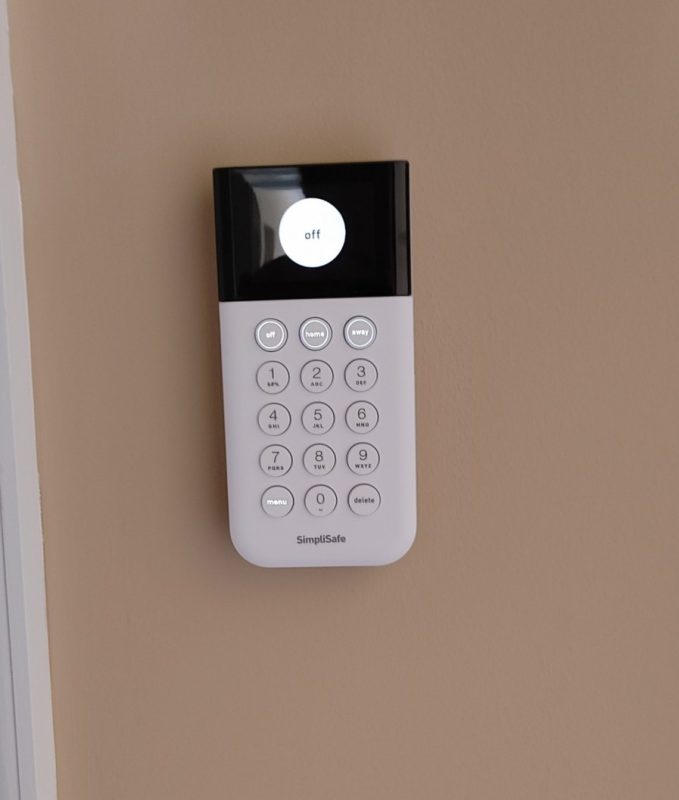
How the Keypad Mounts
The SimpliSafe Keypad has two parts: the keypad itself and a separate mounting bracket that pulls off the back. Start by separating them — it’s easier to work with the bracket alone when positioning and attaching it to the wall.
On the back of the mounting bracket you’ll find four 3M Command Strips already applied. These are what SimpliSafe intends you to use for wall attachment, and they work well on most surfaces.
Installing with Command Strips (No-Drill)
Peel the wax backing off each of the four strips, then position the mounting bracket where you want it on the wall. Use a level before pressing — the keypad is large enough that even a slight angle will be noticeable once it’s on. It’s worth the extra minute.
Once you have it straight, press firmly on all four corners where the tape sits. SimpliSafe recommends holding pressure for 30 seconds per strip. After that, let the bracket sit against the wall for at least 30 minutes before snapping the keypad back on. Rushing this step is the most common reason the mount doesn’t hold.
Installing with Screws
The back of the mounting bracket also has four screw holes. If you’d prefer a more permanent installation — or if your wall surface doesn’t work well with adhesive — screws are the right call. They’re included in the box.
Mark your four hole positions, drill pilot holes if needed, and screw the bracket directly to the wall. It’s a more involved install but there’s no question about whether it’ll hold. The trade-off is that you’ll leave holes if you ever move it.
Replacing the Adhesive Later
If the Command Strips ever give out or you need to relocate the keypad, replacement strips are inexpensive and widely available. 3M Command Strip Adhesive Tape is what SimpliSafe uses from the factory. Before applying new strips, remove all remnants of the old adhesive from the mounting plate — any leftover tape will prevent the new strips from bonding properly. Press firmly and give it the full 30-minute cure time before reattaching the keypad.
For a stronger permanent bond, 3M VHB Tape is an option, but it’s not removable in any practical sense — it will pull paint on the way out. Only use it if you’re certain of the location. Not a big fan of this method because it will damage your walls if you ever want to remove this. Nothing worse than selling a home and realizing you need to remove a VHB strips. Try to avoid this if you can.