
Most outdoor security cameras ship with a basic wall mount in the box. For a standard flat-wall installation, that included mount usually does the job. But the moment you need to cover a corner, mount from a gutter, attach to vinyl siding without drilling, or get a camera onto a fence post or pole, the included hardware can fall short. That is where third-party mounts become useful.
This guide covers some of the best universal mounting solutions for outdoor security cameras, organized by mounting location. Many of these mounts use the standard 1/4″-20 tripod thread found on cameras from brands such as Arlo, Ring, Wyze, eufy, Reolink, Google Nest, SimpliSafe and Tapo.
But don’t assume every camera from those brands uses a 1/4″-20 connection. Mounting systems can vary substantially even within the same brand. Some cameras use proprietary plates, magnetic bases or model-specific brackets instead.
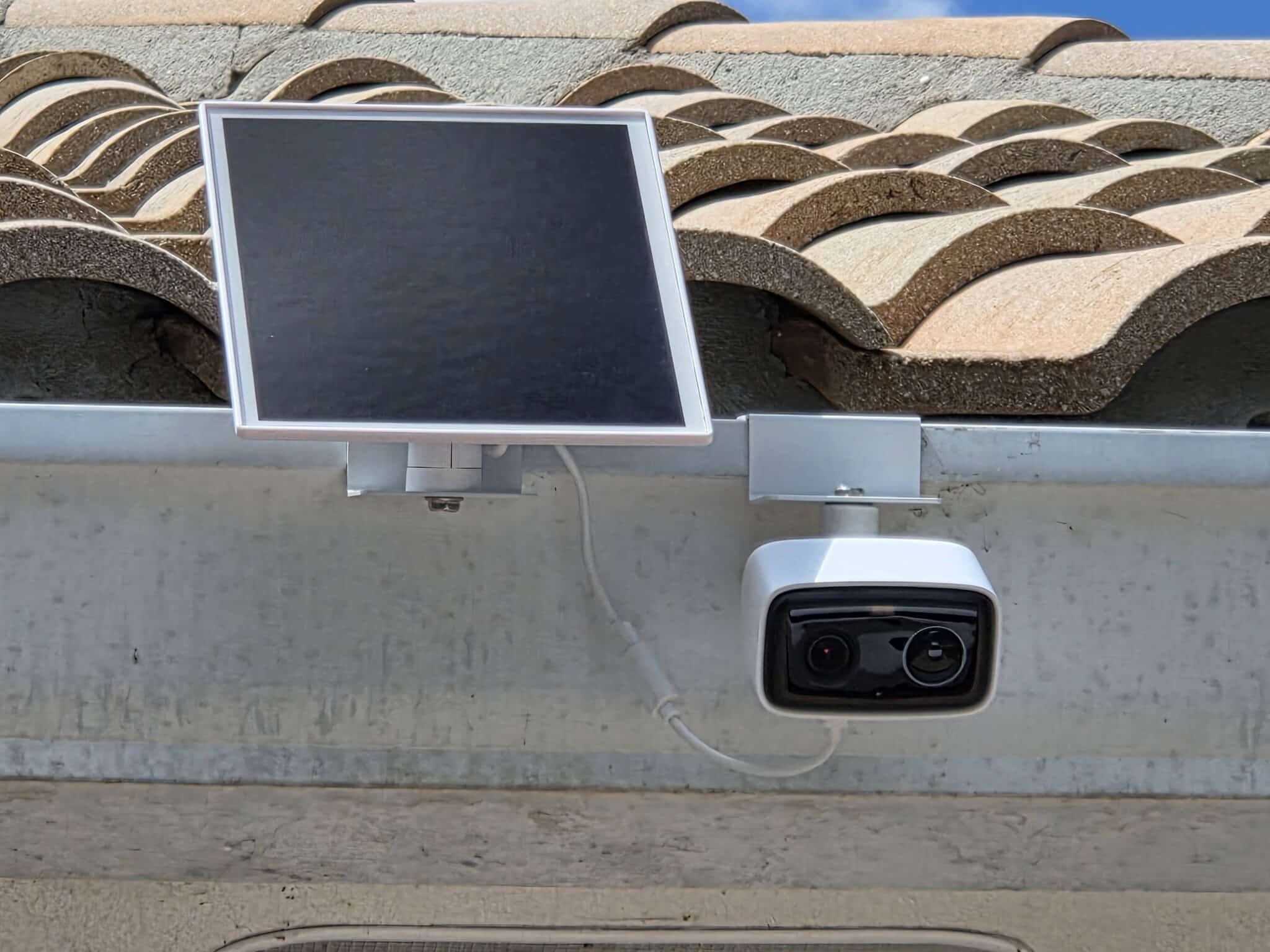
Quick Comparison: Best Universal Outdoor Security Camera Mounts
| Mount | Best For | Location |
|---|---|---|
| Wasserstein 2-in-1 Gutter Mount (Camera + Solar) | Best Gutter Mount / Solar Panel Combo | Rain Gutter |
| Wasserstein Gutter Mount (Camera Only) | Best Camera-Only Gutter Mount | Rain Gutter |
| Wasserstein 2-in-1 Pole Mount (Camera + Solar) | Best Pole / Post Mount | Fence Post, Pole |
| Holicfun No-Drill Vinyl Siding Mount | Best No-Drill Siding Mount | Vinyl Siding |
| HOLACA Magnetic Wall Mount | Best for Metal Surfaces / No Drill | Metal Surfaces, Garage |
The 1/4-20 Thread: Why It Matters
The 1/4″-20 is the standard tripod thread used by cameras for decades. When a security camera includes this threaded socket, you can choose from a much larger selection of third-party wall, gutter, siding, magnetic and pole mounts instead of being limited to the manufacturer’s bracket.
The important part is to check the specific camera model, not just the brand. Even closely related cameras can use completely different attachment systems.
Tapo is a good example. The Tapo C425 can use 1/4″-20 mounting hardware, while the outdoor pan-and-tilt C500, C510W, C520WS and C530WS family uses a different mounting arrangement.
If you own one of those models, see our dedicated guide to Tapo C520WS, C500, C510W and C530WS mounts for gutter, siding, magnetic, pole and corner options.
Unless otherwise noted, the universal mounts below require a compatible 1/4″-20 mounting point or an appropriate adapter.
Gutter Mounts: The Best Location Most People Overlook
Mounting a security camera on a rain gutter is one of the smartest placement options available. The gutter puts the camera at eave height, which often provides a wide downward field of view across driveways, yards, walkways and approaches.
It also gets the camera out of easy reach without requiring holes in siding, fascia or trim.
The two Wasserstein gutter mounts below cover the main use cases: one for owners who also want to mount a solar panel on the same bracket, and one for owners who just need a camera.
Wasserstein 2-in-1 Gutter Mount: Camera and Solar Panel
The Wasserstein 2-in-1 gutter mount lets you mount both your camera and solar panel from the same gutter bracket. That solves a common battery-camera problem: the best camera angle and the best solar-panel angle are rarely identical.
The two devices can be aimed independently, letting you point the camera toward the area you want to monitor while positioning the solar panel toward the available sunlight.
No drilling is required. The bracket clamps to the gutter and provides adjustable mounting points for the camera and panel.
Wasserstein Gutter Mount: Camera Only
If you do not use a solar panel, the camera-only Wasserstein gutter mount is the cleaner option. It keeps the installation simple while still giving you the major advantage of gutter mounting: a high camera position without drilling into the house.
Pole and Post Mounts: Covering Open Areas
A fence post, yard light pole or dedicated security-camera pole can provide coverage where the walls and eaves of the house simply cannot reach.
This can be especially useful for gates, detached garages, long driveways or the far side of a property.
Wasserstein 2-in-1 Pole Mount: Camera and Solar Panel
The Wasserstein pole mount uses an adjustable strap system that wraps around a post or pole without requiring permanent mounting holes.
Like the gutter version, it provides separate mounting positions for the camera and solar panel so each can be aimed independently.
The strap design also makes the installation easier to reposition later if the original camera angle does not provide the coverage you expected.
No-Drill Siding Mounts: Renter-Friendly and Damage-Free
Drilling through vinyl siding is a significant commitment. A poorly placed or improperly sealed hole can allow moisture behind the siding, and renters may not be permitted to drill at all.
No-drill siding mounts solve this by attaching to the overlapping edge of compatible vinyl siding panels.
Holicfun No-Drill Vinyl Siding Mount
The Holicfun vinyl siding mount clips onto standard horizontal siding and provides a 1/4″-20 mounting point for compatible cameras.
This makes it useful for renters, homeowners who want to test a location before drilling, or anyone who expects to reposition the camera later.
Magnetic Mounts: Garages, Metal Surfaces and Temporary Installs
If you have a suitable steel surface available, a magnetic mount can be one of the fastest ways to install a security camera.
There are no screws or holes to deal with, and magnetic mounting is particularly useful when testing different camera positions before committing to a permanent installation.
HOLACA Magnetic Wall Mount
The HOLACA magnetic mount combines a magnetic base with a standard 1/4″-20 camera connection.
That makes it suitable for compatible lightweight security cameras on steel posts, metal structures, shelving and other magnetic surfaces.
The rubber-coated base also helps reduce scratching while improving grip.
This type of mount is especially useful for temporary installations or for experimenting with different viewing angles.
Placement Tips That Matter More Than the Mount
The best mount in the wrong location can produce worse security coverage than a basic mount in the right location. A few principles apply to nearly every outdoor camera.
Height matters, but higher is not always better. Roughly 8 to 12 feet is a useful starting range for many residential installations. Going too high can reduce useful facial detail and create a steep viewing angle.
Think about how people approach the camera. Motion-detection performance varies by camera and detection technology, so the best angle is one that gives the camera a clear view of the area you want to monitor instead of forcing it to detect activity at the extreme edge of its range.
Avoid unnecessary direct sunlight. Strong sunlight entering the lens can reduce image quality and create difficult exposure conditions. If possible, choose an angle that limits direct sun into the camera.
Solar panels need good exposure. If your camera uses a solar panel, prioritize an installation position that gives the panel several hours of unobstructed sunlight rather than automatically placing it beside the camera.
Frequently Asked Questions
How do I know if my camera has a 1/4-20 threaded hole?
Check the bottom or back of the camera for a threaded mounting socket. The product specifications or manual may also identify it as a 1/4″-20 or tripod mounting thread.
If the camera uses a proprietary magnetic dome, snap-in plate or multi-screw mounting bracket instead, a universal 1/4″-20 mount may not work without an adapter.
Do gutter mounts work on all gutter types?
Not necessarily. Compatibility depends on the gutter profile and the design of the clamp. Standard residential gutters are the easiest fit, while unusual rounded or specialty gutter profiles may require a different solution.
Can I use these mounts on a wood fence?
Yes, depending on the mount. Strap-style pole mounts can work around suitable fence posts without drilling. If you are comfortable using screws, the factory wall bracket included with many cameras may also work well on a substantial wood post.
Will a vinyl siding mount hold in wind?
A properly installed siding clip can work well with a lightweight residential security camera, but the result depends on the siding profile, mount design and local weather conditions. In exposed locations with frequent severe weather, a permanent bracket may provide more confidence.
Can I mount a solar panel separately from the camera?
Yes. In many installations that is preferable because the best camera angle and the best solar-panel angle are different. A separate mounting point can let you optimize each independently.
Do these mounts work with wired cameras?
They can, provided the camera uses the correct mounting interface and there is enough clearance for power or Ethernet cabling. Check both the mounting connection and cable path before ordering.
Brand-Specific Mount Guides
Looking for mounting solutions tailored to a specific camera? These MountGuys guides cover models that may need different hardware or have additional mounting choices: