
Mounting a DSLR camera in a vehicle isn’t as simple as mounting a phone or a dash cam. You’re dealing with more weight, larger lenses, and the need for real stability, especially if you want usable photos or smooth video while you’re on the move. A good vehicle DSLR camera mount has to handle that extra weight without shifting, vibrating, or working loose over a long drive.
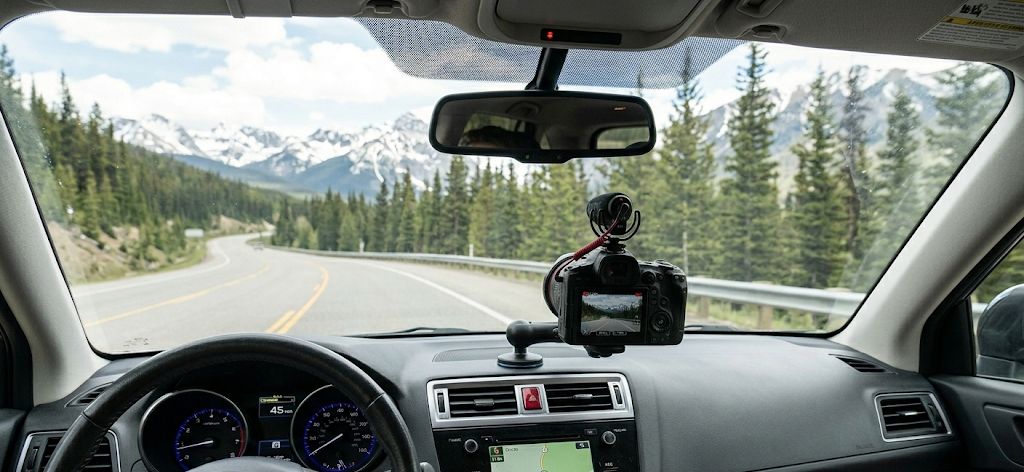
This guide covers cars, trucks, vans, and travel setups, since that’s how most people use a vehicle DSLR camera mount today: road trips, overlanding, wildlife photography, and mobile content creation. Whether you’re shooting through the windshield or bracing a camera on the dash for a stationary shot, the mounting hardware matters just as much as the camera itself.
The goal isn’t just to hold your camera. It’s to keep it stable, properly positioned, and safe while you shoot, whether you’re parked on the shoulder of a scenic route or rolling down the highway at speed.
Table of Contents
Quick Comparison: Best DSLR Camera Mounts for Vehicles
| Mount | Best For | Key Advantage |
|---|---|---|
| Delkin Fat Gecko Triple | Heavy DSLR setups | Triple suction for maximum stability |
| RAM Twist-Lock Camera Mount | Long-term durability | Industrial build quality, lifetime warranty |
| Delkin Fat Gecko Mini | Travel and mirrorless setups | Compact, dual suction, easy to pack |
| Neewer Heavy Duty Suction Mount | Budget setups | Affordable entry into vehicle mounting |
What Makes a Good Vehicle DSLR Camera Mount
A vehicle DSLR camera mount has a completely different set of requirements compared to a phone mount. If you try to use a cheap or lightweight mount, it will fail, either right away or after a few trips.
- Weight capacity: DSLR cameras with lenses attached can exceed 2 to 5 pounds
- Stability: Even minor vibration can ruin a shot at speed
- Mount strength: The suction or base has to hold consistently over time, not just on day one
- Positioning: Full adjustability matters for framing shots correctly
- Standard mount: Look for 1/4″-20 tripod thread compatibility
Every mount in this guide connects using the standard tripod screw found on virtually every DSLR camera, so swapping between a tripod and a vehicle mount is simple.
Best Mounting Locations for Cars, Trucks, and Travel
Where you mount the camera will directly shape the footage or photos you come away with.
- Windshield: Best for forward-facing shots and driving footage
- Dashboard: More stable for stationary shooting
- Side window: Ideal for wildlife or roadside photography
- Interior framing: Useful for vloggers and content creators shooting themselves
Windshield mounts give you the most flexibility for angle and reach. Dash mounts provide better stability since there’s less arm extension involved. Side window mounts open up creative shooting angles that aren’t possible from the front of the vehicle.
Be aware of state rules that apply to windshield mounts before choosing this location, since a few states restrict what can be attached to the glass.
Suction Mounts vs Clamp-On Mounts
Most vehicle DSLR camera mounts rely on suction, but clamp-based mounts show up occasionally too, usually attached to a headrest post or a grab handle. Suction mounts win out for most people because they can go almost anywhere there’s a flat piece of glass or painted metal, and the good ones hold just as well as a clamp once the surface is clean.
Clamp mounts have an advantage in one specific situation: extended, bumpy off-road driving where a suction cup might slowly work itself loose over hours of vibration. If overlanding on rough terrain is your main use case, a headrest or handle clamp paired with a ball head is worth considering alongside the suction options below. For most road trip and everyday shooting, though, a quality multi-point suction mount is simpler to move between vehicles and doesn’t require drilling or permanent hardware.
Best DSLR Camera Mounts for Cars and Trucks
1. Delkin Fat Gecko Triple Mount (Best Overall)
This is one of the most trusted DSLR mounts available, especially for heavier camera and lens combinations. The triple suction design spreads the load across three separate mounting points, which dramatically improves stability compared to single-cup mounts. That difference becomes obvious once you add a longer lens or start shooting video, where even small movements show up on camera.
The adjustable arms let you position the camera exactly where you need it. Whether you’re shooting forward through the windshield or angled out a side window, the flexibility is there without fighting the mount for every small adjustment.
This setup is particularly well suited to road trips, wildlife photography, and content creators who need reliable positioning inside a vehicle over long stretches of driving. If you want maximum stability, this is the one to get. We also have a more detailed guide to the Fat Gecko line if you want to compare every model in the lineup.
2. RAM Mounts Twist-Lock Camera Mount (Best Heavy-Duty Option)
RAM Mounts built a reputation on durability, and this mount lives up to it. The twist-lock suction system creates a strong vacuum seal that holds firmly even under heavier loads. It relies on a single suction cup rather than multiple points, but the build quality makes up for it with consistent, dependable holding power.
The ball-and-socket design is one of the best features here. It allows for fine positioning adjustments while keeping the camera locked firmly in place once you tighten it down. This is a solid option if you want a rugged mount built to handle frequent use trip after trip. These are made in the USA and carry a lifetime warranty, which says a lot about how RAM stands behind the build quality.
3. Delkin Fat Gecko Mini (Best Compact Option)
This is a more portable version of the triple mount and works well for lighter camera setups. With dual suction cups, it still provides solid stability while being much easier to position and pack away between shooting locations. That makes it a strong choice for travel photographers who want reliability without carrying bulky gear on every trip.
It’s a good fit for mirrorless cameras or smaller DSLR bodies without a heavy telephoto lens attached. Made by Delkin, which builds some of the most consistent camera mounts on the market, this is the version to reach for when packing light matters more than raw holding capacity.
4. Neewer Heavy Duty Suction Mount (Budget Option)
This is a reasonable entry-level option for photographers testing out vehicle-mounted setups before committing to a pricier mount. It offers decent suction strength and standard tripod compatibility, but it’s best suited for lighter cameras rather than a full-frame DSLR with a long lens attached.
It won’t match the stability of the higher-end options above, but it’s functional for casual use and a good starting point if you’re experimenting with vehicle-mounted photography for the first time.
Best Setup by Use Case
- Road trips: Fat Gecko Triple
- Heavy DSLR with a zoom lens: RAM Twist-Lock Mount
- Travel and light gear: Fat Gecko Mini
- Testing the waters on a budget: Neewer mount
Common Problems with DSLR Camera Mounts
- Vibration: Causes blurry images and shaky video, especially on rougher roads
- Suction failure: Usually comes from a dirty or dusty mounting surface
- Overloading the mount: Cheap mounts can’t handle a heavy body and lens combination for long
- Bad positioning: The camera ends up partially blocked by the windshield frame or dashboard
Installation Tips for a Vehicle DSLR Camera Mount
- Clean the mounting surface thoroughly before attaching any suction cup
- Use multiple suction points for heavier camera and lens combinations
- Keep the camera close to the mount base rather than fully extended
- Avoid extending the arm to its full length unless it’s necessary for the shot
- Double check that the camera doesn’t block your view of the road before driving
Frequently Asked Questions
Can any DSLR mount handle a heavy lens?
No. Lightweight suction mounts built for phones or small action cameras aren’t rated for the weight of a DSLR body with a lens attached. Look for mounts that specifically list a higher weight capacity and multiple suction points, like the Fat Gecko Triple or the RAM Twist-Lock.
Is a windshield or dashboard mount better for a DSLR?
It depends on the shot. A windshield mount gives you more reach and a forward-facing angle for driving footage, while a dashboard mount sits lower and holds steadier for stationary shooting. Many photographers keep a mount for each location depending on the trip.
Do I need a full tripod head, or does the ball mount work on its own?
The ball-and-socket heads included with these mounts are enough for most vehicle shooting. A separate tripod head is only worth adding if you need finer control for video panning shots.
Bottom Line
A vehicle DSLR camera mount takes more planning than a simple phone mount, but the right setup dramatically expands what you can capture from inside a car, truck, or van. If you want maximum stability, go with a multi-suction mount like the Fat Gecko Triple or a rugged single-cup option like the RAM Twist-Lock. If portability matters more than raw holding power, the Fat Gecko Mini is the better fit for travel.
Match the mount to your gear and your shooting style, and you’ll get far more usable shots out of every trip.