
Car cell signal boosters can make a major difference when weak coverage turns an otherwise normal drive into dropped calls, stalled navigation, and painfully slow data. They cannot create cellular service where none exists, but they can amplify a usable outside signal and rebroadcast it inside your vehicle.
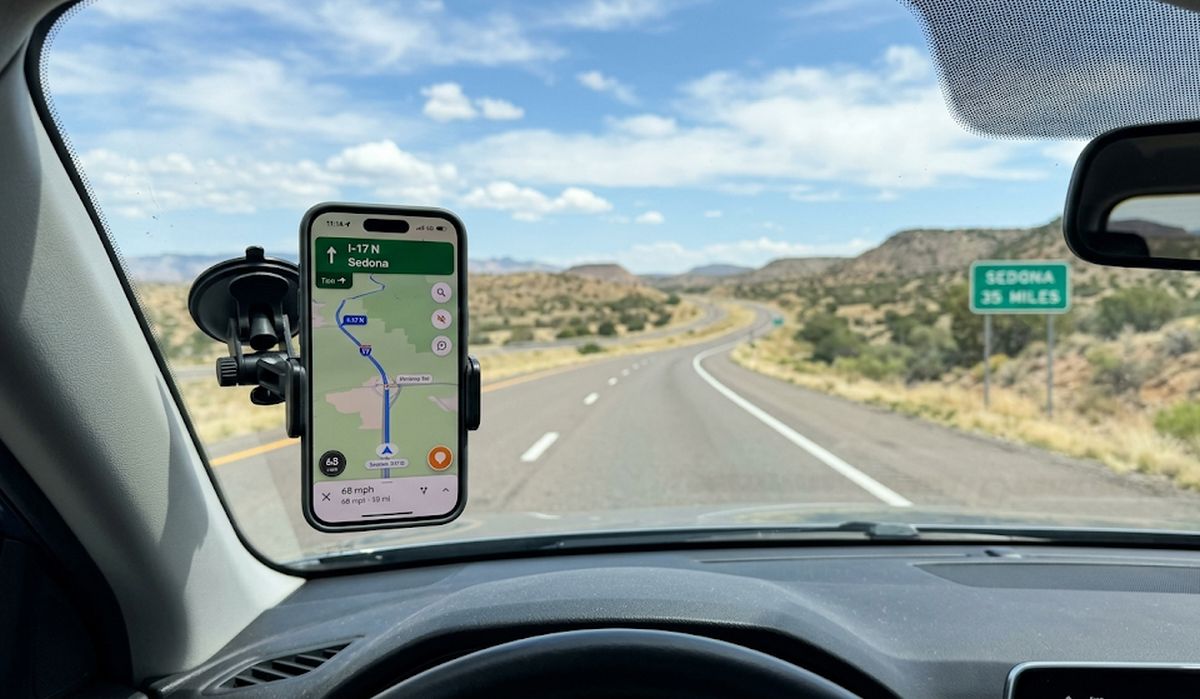
That distinction matters. A booster is most useful when your phone can detect some signal outside the vehicle but struggles to maintain a reliable connection inside. Metal body panels, coated glass, distance from a tower, terrain, and surrounding buildings can all weaken an already marginal signal.
We have covered vehicle accessories at MountGuys for more than twenty years. For this guide, we narrowed the field to five vehicle boosters that serve meaningfully different types of drivers rather than filling the page with near-duplicates.
Quick Comparison: Best Car Cell Signal Boosters
| Booster | Best For | Max Gain | Users |
|---|---|---|---|
| weBoost Drive Reach | Best overall | 50 dB | Multiple |
| SureCall Fusion2Go Ultra | Weak and rural signal | 50 dB | Multiple |
| HiBoost Travel 3.0 Car | Feature-rich alternative | 50 dB | Multiple |
| weBoost Drive X | Best value | 50 dB | Multiple |
| weBoost Drive Sleek | Solo drivers | Single-device design | One |
weBoost Drive Reach: Best Overall
The weBoost Drive Reach remains our best overall pick because it combines 50 dB of maximum gain with multi-device coverage and a proven vehicle-focused design.
weBoost says the Drive Reach can extend usable connection range by up to twice as far as an unboosted device under appropriate conditions. It supports cellular bands used by major U.S. carriers and can boost multiple phones, tablets, and hotspots at the same time.
That makes it particularly useful for road trips, rural driving, mountain routes, and work vehicles where several devices may need connectivity simultaneously.
The system uses three main components: a magnetic exterior antenna, the amplifier itself, and an interior antenna that rebroadcasts the amplified signal inside the vehicle.
Installation does not require permanent modification to the vehicle. The exterior antenna mounts to a suitable metal surface on the roof, the cable runs inside, and the booster connects to vehicle power.
One reason we continue to like the Drive Reach is that it does not depend on a phone cradle. Once the system is installed, compatible devices inside the vehicle benefit without being physically attached to the booster.
The current Drive Reach is backed by a two-year manufacturer warranty and a 30-day money-back guarantee.
SureCall Fusion2Go Ultra: Best for Weak and Rural Signal
The SureCall Fusion2Go Ultra is one of the strongest alternatives to weBoost for drivers who regularly encounter weak rural coverage.
Like the Drive Reach, it provides up to 50 dB of gain and is designed to support multiple devices inside a car, truck, or SUV.
Where the SureCall stands out is uplink performance. SureCall rates the Fusion2Go Ultra at up to 30 dBm maximum uplink power. Uplink power matters because the booster is not only receiving signal from a tower. It also has to help transmit your phone’s signal back toward that tower.
That can become increasingly important in rural areas where the limiting factor is not simply hearing the tower but successfully maintaining the return connection.
The Fusion2Go Ultra supports major U.S. cellular bands used for 4G LTE and many 5G connections. The kit includes a magnetic exterior antenna and interior antenna, and SureCall provides an app that can help with antenna placement and setup.
SureCall also backs the Fusion2Go Ultra with a three-year warranty, which is longer than the warranty on the weBoost vehicle models in this guide.
We would consider the Fusion2Go Ultra especially strongly for someone whose main reason for buying a booster is driving through rural highways, mountain areas, or other places where outside signal exists but is consistently weak.
HiBoost Travel 3.0 Car: Best Feature-Rich Alternative
The HiBoost Travel 3.0 Car gives buyers another 50 dB multi-user option without simply copying the weBoost formula.
HiBoost rates the Travel 3.0 Car for cars, vans, and SUVs. It supports multiple phones and devices throughout the vehicle and is compatible with major U.S. carriers.
The current Travel 3.0 generation uses an updated amplifier and exterior antenna compared with older HiBoost vehicle systems. It also includes support for HiBoost’s Signal Supervisor app, which provides signal information that can help during setup and troubleshooting.
That app-oriented approach will appeal to buyers who want more visibility into what the booster is doing rather than simply installing it and forgetting about it.
HiBoost advertises 5G compatibility on the cellular bands supported by the booster, FCC approval, and a three-year warranty.
The Travel 3.0 is especially appealing if you want a full multi-device system but prefer HiBoost’s app-based monitoring or want another established option beyond weBoost and SureCall.
weBoost Drive X: Best Value
The weBoost Drive X is a strong middle-ground choice for drivers who want a full multi-device booster without stepping all the way up to the Drive Reach.
It provides up to 50 dB of gain and uses a magnetic outside antenna, an amplifier, and an interior antenna just like the more expensive Drive Reach.
The important difference is overall system performance rather than maximum gain alone. Two boosters can both carry a 50 dB maximum gain specification and still perform differently because of antenna design, amplifier behavior, transmit power, and how the system handles weak real-world signals.
weBoost says the Drive X can reach towers up to 33% farther than its Drive Sleek single-device booster.
For drivers dealing with suburban dead spots, uneven highway coverage, or occasional rural travel, that may be enough without paying for the Drive Reach.
The Drive X supports multiple devices simultaneously and comes with guided installation through the weBoost app. weBoost currently backs it with a two-year warranty and 30-day return period.
weBoost Drive Sleek: Best for One Phone
Not everyone needs to rebroadcast cellular signal throughout an entire vehicle. The weBoost Drive Sleek takes a different approach by combining the interior antenna with a phone cradle.
That means the boosted phone needs to sit in the cradle, making this a much better match for solo drivers than families or work crews with several devices.
The Drive Sleek supports major U.S. cellular networks and bands used for LTE and many 5G connections. weBoost describes it as the strongest amplification permitted by the FCC for this type of cradle booster.
The biggest advantage is simplicity. The system takes up less space than a full-cabin booster, and the cradle keeps the phone positioned directly beside the interior antenna.
There is an obvious tradeoff: passengers do not receive the same cabin-wide boosted signal that they would from the Drive Reach, Drive X, SureCall, or HiBoost systems.
For a commuter who mainly wants stronger calls, navigation, streaming, and data on one phone, however, paying for an entire multi-device system may not be necessary.
The Drive Sleek also includes a charging port and comes with the same two-year warranty offered on other current weBoost vehicle boosters.
How Car Cell Signal Boosters Work
Vehicle signal boosters use three basic components: an outside antenna, an amplifier, and an inside antenna.
The outside antenna receives cellular signals available around the vehicle and sends them to the amplifier.
The amplifier strengthens the supported frequencies and sends the boosted signal to the interior antenna.
Your phone then communicates through that stronger signal. The process also works in the opposite direction, helping transmit the phone’s signal from the vehicle back toward the cellular network.
This two-way operation is one reason uplink performance matters as much as raw gain when signal conditions become difficult.
Why 50 dB Does Not Make Every Booster Equal
Several boosters in this guide advertise the same 50 dB maximum gain, but that does not mean they will perform identically.
Maximum gain describes how much amplification the booster can provide under allowable conditions. Real-world performance is also affected by factors including:
- Outside antenna design
- Inside antenna placement
- Available signal strength
- Cellular frequency band
- Uplink transmit power
- Distance and terrain between the vehicle and tower
- Separation between the inside and outside antennas
This is why choosing a booster based solely on the largest gain number is not particularly useful once you are comparing quality 50 dB systems.
Will a Cell Booster Work in a Dead Zone?
Sometimes, but the phrase “dead zone” can be misleading.
If your phone shows one weak bar outside the vehicle but loses service once you get inside, a booster may help considerably.
If the phone cannot detect usable cellular service anywhere around the vehicle, there may be nothing for the booster to amplify.
Terrain can also create abrupt changes. A booster that works well on one side of a mountain or valley may lose effectiveness once the vehicle is physically blocked from the serving tower.
For extended travel far outside cellular coverage, satellite-based communication is a different technology and may be the better solution.
Frequently Asked Questions
Do I need to register a cell signal booster?
Yes. FCC rules require consumer signal boosters to be registered with the subscriber’s wireless provider before use. Major carriers generally provide registration procedures for FCC-certified consumer boosters.
Do car cell boosters work with 5G?
The boosters in this guide support cellular bands used by major U.S. carriers, including bands used for many current 5G connections. A booster does not add new frequencies that it was not designed to support, so “5G compatible” should not be interpreted as support for every possible 5G band.
Will a signal booster work with multiple carriers?
The multi-user boosters in this guide are designed to support major U.S. carrier networks simultaneously. That means passengers using different carriers can benefit from the same installed booster when their carrier’s supported signal is available.
Can a booster create service where there is no tower signal?
No. A booster needs an existing cellular signal to amplify.
Will the outside antenna damage my vehicle?
Magnetic vehicle antennas do not require drilling when mounted to a suitable steel surface. Keep the mounting area clean because dirt trapped beneath a magnet can potentially scratch paint when the antenna is moved.
Vehicles with aluminum, fiberglass, glass, or composite roof sections may require a different mounting method.
Can I move the booster between vehicles?
Generally, yes. These systems are designed for vehicle installation rather than permanent integration. Moving one requires relocating the outside antenna, amplifier, inside antenna, cables, and power connection.
Is Drive Sleek as powerful as Drive Reach?
They are intended for different jobs. Drive Sleek places the boosted phone directly in a cradle and is designed primarily for one device. Drive Reach rebroadcasts signal inside the vehicle and supports multiple devices.
Why choose SureCall over weBoost?
The Fusion2Go Ultra provides a documented maximum uplink output of 30 dBm along with 50 dB maximum gain and a three-year warranty. That combination makes it particularly interesting for drivers focused on difficult rural signal conditions.
Why choose HiBoost?
The Travel 3.0 provides another 50 dB multi-device option and adds app-based signal monitoring plus a three-year warranty.
Which Car Cell Signal Booster Should You Buy?
For most drivers who regularly encounter weak cellular coverage, the weBoost Drive Reach is the easiest place to start. It supports multiple devices, offers 50 dB maximum gain, and is specifically positioned for difficult vehicle coverage.
Drivers spending substantial time in rural areas should also look closely at the SureCall Fusion2Go Ultra, particularly because of its strong uplink specification.
The Drive X makes more sense for buyers who want multi-device coverage without moving to the top of the weBoost lineup, while the Drive Sleek is the most sensible choice when only one driver’s phone needs the boost.
Related Mount Guides
- Best MagSafe Car Mounts: charging and mounting options for iPhone users.
- Best Starlink Mounts for RV and Vehicle Use: mounting options for drivers who need connectivity beyond conventional cellular coverage.
- Choosing the Right GPS Car Mount: mounting locations and options for dedicated GPS units and smartphones.
- Starlink Mounts Hub: our complete collection of Starlink mounting guides.