
A microphone stand drink holder keeps water, coffee, or another beverage within reach without putting it on the floor beside cables and audio equipment. The best choice depends on what you drink from: a narrow rigid holder works well for cans and small bottles, while a large travel mug or insulated bottle needs a wider holder with more support.
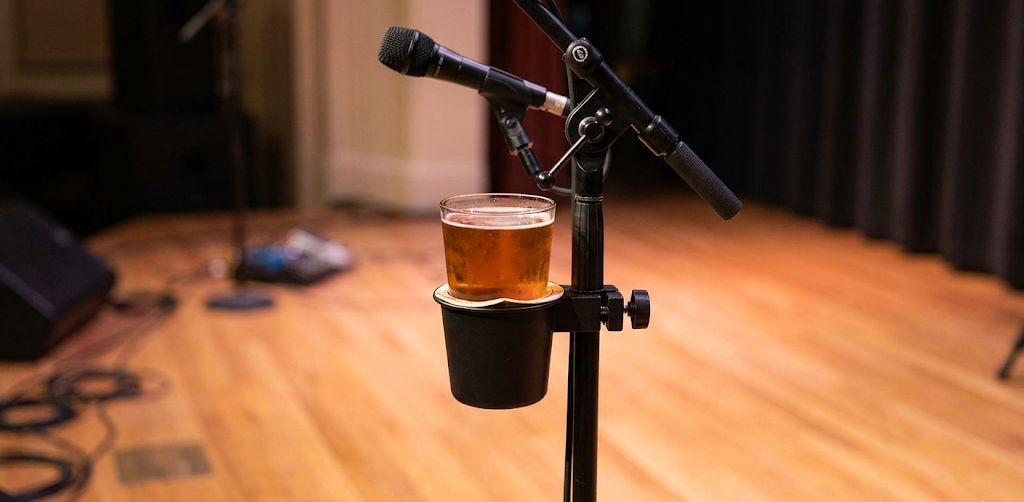
Some mic stand drink holders use a screw clamp, while others use a spring-style attachment or a flexible fabric pouch. Container diameter and stand-tube compatibility matter more than appearance. This guide compares four established options and explains where each one fits best.
Quick answer: The On-Stage MSA5050 is the best all-around microphone stand cup holder for performers using mugs, cans, or ordinary bottles. Choose the String Swing XL for a large reusable bottle or travel mug. The Gator is a simple choice for cans and plastic cups, while the Gravity MA DRINK M is best when you want a rigid holder and can confirm that your drink is no more than 70 mm wide.
Best Microphone Stand Drink Holders Compared
| Drink Holder | Best For | Attachment | Important Fit Detail |
|---|---|---|---|
| On-Stage MSA5050 | Best overall | Clamp with flexible neoprene holder | Accommodates handled mugs as well as common bottles and cans |
| String Swing XL | Large bottles and travel mugs | Spring-style steel mount | Fits stand tubing from 1/2 to 1 inch in diameter |
| Gator GFW-SINGLECUP | Cans and plastic cups | Anti-slip clamp | Designed for standard mic stands and drum hardware |
| Gravity MA DRINK M | Small bottles, cans, and glasses | Adjustable screw clamp | Fits tubes up to 35 mm and containers up to 70 mm wide |
1. On-Stage MSA5050: Best Overall
The On-Stage MSA5050 is the most versatile choice in this group because its beverage pocket is made from flexible neoprene rather than a rigid plastic ring. That flexibility gives it an advantage when you switch between a bottled drink, a can, and a mug with a handle. A rigid circular holder may fit one of those perfectly and reject another.
The holder attaches to a microphone stand with a clamp and places the drink a short distance from the shaft. Neoprene also keeps a cold container from rattling directly against a hard holder. It does not eliminate condensation, but it provides a soft surface around the container and avoids the hard-plastic contact found on many basic holders.
This is the first model I would consider for a vocalist, podcaster, teacher, worship leader, or musician who does not use the same container every time. It is also a sensible shared-room choice because several people can use it with different cups and bottles. The tradeoff is that a soft pouch does not have the precise, fixed shape of a rigid holder. If you want a firm ring for a narrow can or bottle, the Gravity or Gator may suit you better.
Best for: Mixed drink containers, handled mugs, rehearsal rooms, stages, churches, and podcast setups.
2. String Swing XL: Best for Large Bottles and Travel Mugs
The String Swing XL is the better choice when your everyday bottle or travel mug is too wide for a conventional mic stand cup holder. It is specifically sold as the larger version for travel mugs and large water bottles, so it fills a gap left by products intended mainly for cans and narrow bottles.
Its attachment system is also different. The steel mount secures to the stand without a separate screw clamp and is designed for mic, music, and cymbal stands with tubing from 1/2 to 1 inch in diameter. That broad published range covers many common stand shafts, but you should still measure an unusual or heavy-duty stand before ordering.
The XL size is useful, but bigger is not automatically safer. A full insulated bottle can add substantial weight to one side of a lightweight tripod stand. Mount this holder low on the main shaft and rotate the base so one tripod leg extends toward the drink. Do not place it on the boom arm. Those steps keep the added weight closer to the center and give it more support underneath.
String Swing makes the holder in the United States and backs it with a lifetime structural warranty. That does not mean every oversized container will fit, so compare the shape of your bottle or mug with the holder before relying on it at a performance.
Best for: Large reusable bottles, travel mugs, long rehearsals, teaching spaces, and performers who want more drink capacity.
3. Gator GFW-SINGLECUP: Best for Cans and Plastic Cups
The Gator GFW-SINGLECUP is a simple rigid holder intended for a single beverage. Gator specifically describes it for cans and plastic cups, which makes it a good match for performers who carry a canned drink or use a disposable cup during rehearsals and gigs.
Its clamp works with standard microphone stands and drum hardware. That second use is valuable for drummers who want a drink attached to a cymbal or hardware stand instead of sitting near pedals and moving feet. The clamp also has an anti-slip design to resist rotating around the stand after it is tightened.
The main limitation is container selection. This is not the model to buy for an oversized insulated tumbler or a wide reusable bottle. The rigid opening cannot expand the way the On-Stage neoprene holder can, and it is not positioned as an XL holder like the String Swing. Buy it because you want a compact holder for ordinary cans and cups, not because you want one holder for every container in the cabinet.
Best for: Cans, plastic cups, basic stage use, drum hardware, and buyers who want a compact rigid holder.
4. Gravity MA DRINK M: Best Compact Rigid Holder
The Gravity MA DRINK M has the clearest published fit limits of the four. Its screw clamp fits microphone, speaker, and music stand tubing up to 35 mm in diameter. The holder is intended for bottles, cans, cups, and glasses up to 70 mm wide. Those numbers make it easier to determine whether it will fit your setup before ordering.
This is a relatively narrow holder. Many common cans and slim water bottles fit within a 70 mm limit, but large insulated tumblers and wide bottles will not. Measure across the widest part of your usual container rather than relying on its listed liquid capacity. Two bottles that hold the same amount can have very different outside diameters.
The adjustable screw clamp can be arranged for vertical or horizontal mounting, and the needed hex key is included. For a microphone stand, the main vertical shaft remains the best location. The ability to attach it in other orientations is useful on compatible music stands, speaker stands, or other tubing, but a horizontal boom becomes easier to unbalance as soon as a drink is added.
Best for: Narrow bottles, cans, glasses, measured installations, and users who prefer a rigid holder with documented limits.
How to Choose a Microphone Stand Cup Holder
Measure the Container Diameter
Measure the widest section of the bottle, cup, or mug you plan to use. Do not base the decision only on ounces. A tall narrow bottle and a short insulated tumbler may hold the same amount while requiring very different holders. If the manufacturer publishes an inside-diameter limit, leave a little clearance so the drink can be removed without lifting the entire stand.
Check the Stand-Tube Range
Microphone stand shafts are not all identical. Measure the tube at the exact mounting location, especially if you use a compact stand, an unusually thick stand, or a stand with telescoping sections. A holder that fits the lower tube may not tighten securely around the thinner upper section.
Choose Soft or Rigid Construction
A soft neoprene holder accommodates more container shapes and prevents hard surfaces from rattling together. A rigid ring gives a can or correctly sized bottle a more defined resting position. Neither design wins for everyone. Match the construction to the container you bring most often.
Consider the Full Weight
A large bottle may fit the holder but still be too heavy for a lightweight stand. Consider the weight after the bottle is filled. If the stand already carries a long boom, tablet holder, phone mount, or other accessory, the combined off-center weight can make it easier to tip.
Where to Mount the Drink Holder
Attach the holder to the main vertical shaft and keep it below hand level. This location keeps the drink away from the microphone, boom adjustment, and most cable movement. It also places the added weight lower than a boom-arm installation.
- Choose a clear section of the main vertical tube.
- Keep the holder away from height-adjustment collars and knobs.
- Position it on the side opposite the microphone cable when possible.
- Tighten the attachment enough to prevent rotation without crushing thin tubing.
- Place one tripod leg beneath the drink side of the stand.
- Test the setup with the container filled before using it near audio equipment.
Safety tip: A mic stand drink holder reduces the chance of kicking over a bottle on the floor, but it does not make an open cup spill-proof. Use a container with a secure lid around mixers, laptops, interfaces, power strips, and pedalboards.
Frequently Asked Questions
Can a drink holder make a microphone stand tip over?
Yes. A heavy bottle mounted high or far from the center can make a light stand less stable. Mount the holder low on the vertical shaft, point a tripod leg toward it, and avoid combining several heavy accessories on the same side.
Can I attach a drink holder to the boom arm?
Some clamps may fit a boom arm, but that does not make it the best location. The boom already places weight away from the stand’s center. Adding a drink increases that imbalance and can interfere with microphone positioning. Use the vertical shaft whenever possible.
Will a microphone stand cup holder fit a large insulated tumbler?
Only if the holder is wide enough. The String Swing XL is the best option here for large water bottles and travel mugs. Measure the tumbler at its widest point before ordering. The Gravity model is limited to containers up to 70 mm wide, so it is not suitable for many oversized tumblers.
Can these holders attach to music or cymbal stands?
Several can. The String Swing is designed for mic, music, and cymbal stands within its stated tube range. The Gravity works on compatible microphone, speaker, and music stand tubing. Gator lists compatibility with standard microphone stands and drum hardware. Confirm the tube diameter and choose a location that will not interfere with adjustments.
Bottom Line
The On-Stage MSA5050 is the best microphone stand drink holder for most people because its flexible neoprene design accommodates more types of containers, including handled mugs. The String Swing XL is the better choice for large water bottles and travel mugs. Choose the Gator for a compact holder aimed at cans and plastic cups, or the Gravity MA DRINK M when you want a rigid design and your container measures no more than 70 mm across.
Whichever model you choose, verify both the stand-tube size and the container diameter. Mount the holder low on the main shaft and test the balance with a full drink. Those checks matter more than picking the holder with the longest compatibility list.
Related Microphone Stand Mount Guides
Add a tablet or phone without crowding the microphone or making the stand unstable.