
The right motorcycle flag mount depends less on the flag itself and more on where your bike actually gives you something solid to clamp onto. A rear luggage rack, a crash bar, and a bare handlebar all call for different hardware, and using the wrong one is how riders end up with a flag that rattles loose at highway speed or won’t clamp down at all.
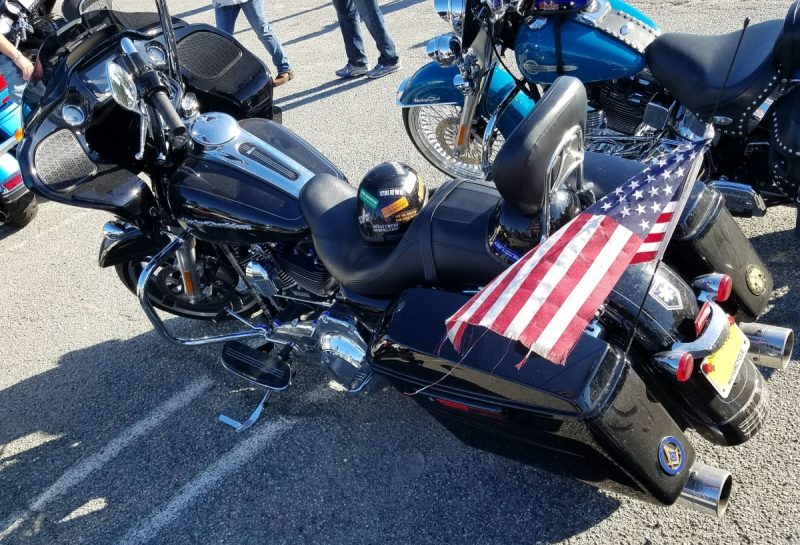
Touring bikes with a Tour Pak or Goldwing-style luggage rack have the easiest path, since a 1/2 inch clamp mount bolts straight onto the rack tubing. Cruisers and bikes with engine guards need a wider clamp built for crash bar and guard rail tubing instead. Bikes with neither, including dirt bikes, standard bikes, and smaller cruisers, still have an option in a handlebar-mounted pole.
Table of Contents
Best Motorcycle Flag Mounts Compared
| Mount | Fits | Best For |
|---|---|---|
| Aochuang Fold Down Flagpole Mount | 1/2 inch luggage rack | Touring bikes, garage clearance |
| Fixed Steel Flagpole Mount | 1/2 inch luggage rack | Budget, simple setup |
| KEMIMOTO Clamp Mount | 0.8 to 1.35 inch round or square rail | Crash bars, guard rails, cruisers |
| Retractable Handlebar Flagpole Mount | Handlebar clamp | Dirt bikes, standard bikes, no rack or rail |
Where to Mount a Flag by Bike Type
Touring bikes with a luggage rack: Harley Tour Pak racks and Honda Goldwing rear racks use 1/2 inch round tubing, which is the most common flag mount fitment on the market. A clamp mount here is stable, easy to install, and puts the flag high enough to be seen without adding much wind drag.
Cruisers with a crash bar or guard rail: Not every bike has a luggage rack, and engine guards or crash bars tend to run a thicker diameter than 1/2 inch tubing. A standard luggage rack mount will not clamp down properly here, so a wider adjustable clamp is the better fit.
Dirt bikes and standard bikes with no rack or rail: Bikes built without a rear rack still have the handlebar as a mounting point. A telescopic pole keeps the flag clear of the rider’s head and shoulders instead of flapping against the helmet.
License plate area (use caution): This spot is generally not recommended. It is easy to block a taillight or your plate, which can lead to a ticket, and stability tends to suffer compared to a rack, rail, or handlebar mount.
Top Picks for a Motorcycle Flag Mount
1. Aochuang Fold Down Flagpole Mount (Best Overall)
This mount clamps onto a 1/2 inch luggage rack and includes a chrome flagpole and American flag. What sets it apart from a standard fixed mount is the fold down hinge. The pole lays flat with a quick release, which matters more than it sounds like on a touring bike. Garage doors, car washes, and low clearance parking spots have all claimed more than one rigid flagpole.
The stainless steel construction holds up well against vibration, and the fold down joint has not been a common failure point in owner feedback. For riders who want a flag up on the highway and out of the way at home, this is the mount to start with.
2. Fixed Steel Flagpole Mount (Best Budget)
If you do not need the fold down feature, a basic fixed mount gets the job done for less. This one uses a 13 inch steel pole and a 6 inch by 9 inch double sided flag, sized to avoid excessive wind drag on the highway. It fits the same 1/2 inch luggage rack tubing as the Aochuang mount above.
There is nothing fancy here. It is a straightforward clamp, pole, and flag setup for riders who just want a working flag mount without paying for extra features.
3. KEMIMOTO Clamp Mount (Best for Crash Bars and Guard Rails)
Not every bike has a 1/2 inch luggage rack to work with. Cruisers and bikes with engine guards or crash bars often have thicker round or square tubing, and that is where a clamp style mount like this one comes in. It adjusts to fit tubing from 0.8 inches to 1.35 inches, round or square, which covers most guard rails and crash bars.
It is built and marketed for boats and golf carts, but the clamp range and 360 degree adjustability make it a solid fit for motorcycle guard rails where a standard 1/2 inch luggage rack mount will not clamp down properly.
4. Retractable Handlebar Flagpole Mount (Best Handlebar Mount)
For bikes without a luggage rack or a crash bar to clamp onto, a handlebar mount is the simplest option. This one attaches directly to the handlebar and extends to 63 inches, so the flag clears the rider’s head and shoulders instead of flapping right next to the helmet.
The stainless steel and plastic build keeps it light on the handlebar, and the telescopic design lets you collapse it down when the flag is not needed. It is a good fit for dirt bikes, standard and naked bikes, and smaller cruisers that were not built with a rear rack in mind.
How to Install a Motorcycle Flag Mount
Installation varies slightly by mount type, but the core steps are the same whether you are clamping onto a luggage rack, a crash bar, or a handlebar.
- Confirm your tubing size before you buy. Measure the rack, guard rail, or handlebar diameter. Luggage rack mounts are built for 1/2 inch tubing, crash bar clamps like the KEMIMOTO need a wider range, and handlebar mounts clamp directly to the bar itself. A mount sized for the wrong tubing will not close down properly.
- Pick a solid metal mounting point. Avoid plastic body panels or anything that flexes. The rack, rail, or bar itself should be the only thing bearing the clamp’s pressure.
- Position the clamp and hand-tighten first. Get the flagpole angle and orientation set before you commit to final torque. This is also the point to check that the flag will not block a taillight, brake light, or your license plate.
- Tighten the hardware evenly. Snug the clamp bolts down in stages rather than cranking one side fully before the other. Stop once the mount is solid. Overtightening can crack a clamp or strip the threads, especially on lower-cost stainless hardware.
- Attach the flag and check clearance. With the pole in place, confirm the flag has room to move without hitting saddlebags, the rider, or a passenger.
- Take a short ride and recheck everything. Vibration on the first few rides will reveal any hardware that was not fully seated. Recheck the clamp bolts and the flag’s grommet attachment after your first ride, then again after a few hundred miles.
After that initial check, a periodic inspection every month or two is enough to catch a loosening clamp or a worn grommet before it becomes a lost flag on the highway.
Common Motorcycle Flag Mount Problems
Loose mounts. Check bolts after your first few rides. Vibration will loosen poorly torqued hardware over time.
Flag tearing. Larger flags create more wind drag and wear out faster. A 6 inch by 9 inch or 6 inch by 10 inch flag is a good balance of visibility and durability at highway speed.
Mount movement. Cheap plastic clamps can shift or rotate. Metal clamp designs, like the ones above, hold their position far better.
Blocked lights or plates. Make sure the mount and flag do not interfere with brake lights or your license plate, especially on rear mounted setups.
Motorcycle Flag Mount FAQ
What size luggage rack do most motorcycle flag mounts fit? Most clamp-style flag mounts, including the Aochuang and fixed steel mount above, are built for 1/2 inch round tubing, which is the standard size on Harley Tour Pak racks and Honda Goldwing rear racks.
My bike has a crash bar instead of a luggage rack. Will a standard mount work? No. A 1/2 inch luggage rack clamp will not close down on a thicker crash bar or guard rail. A wider adjustable clamp, like the KEMIMOTO mount, is built for that range instead.
What if my bike doesn’t have a rack, rail, or guard bar at all? A handlebar mount is the fallback. It clamps directly to the bar and telescopes out, which works well on dirt bikes and standard bikes that were not built with a rear rack.
Should I mount a flag on my license plate bracket? It is not recommended. It is easy to block a taillight or the plate itself, which can lead to a ticket, and the mount tends to be less stable than a rack, rail, or handlebar mount.
Bottom Line
The right motorcycle flag mount comes down to what your bike actually gives you to clamp onto. If you have a luggage rack, the Aochuang fold down mount is the easiest all around choice, and the fixed steel mount is the budget option if you do not need the fold down feature. If your bike relies on a crash bar or guard rail instead, the KEMIMOTO clamp mount covers a wider range of tubing sizes and will fit where a standard 1/2 inch luggage rack mount will not. And if your bike has none of the above, the retractable handlebar mount gets a flag flying without needing a rack or rail at all.